SATCOM Adopting 3GPP Standards: From Proprietary Silos to Global Scale

The satellite communications industry is shedding its legacy of proprietary isolation to join the global 5G ecosystem. By adopting 3GPP standards, SATCOM is transitioning from a specialized niche into a seamless extension of terrestrial mobile networks, effectively turning orbiting assets into “cell towers in the sky.” This convergence marks the end of closed technological silos and the beginning of a standardized, interoperable space economy.
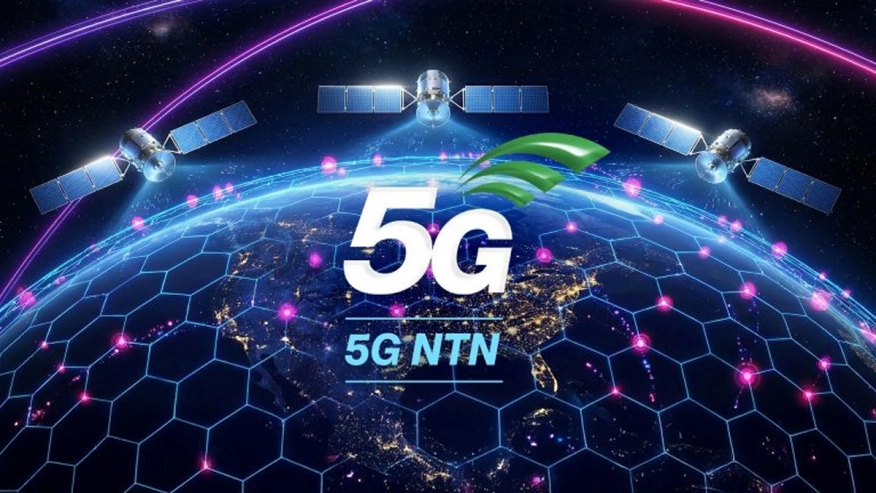 This shift is propelled by an unprecedented commercial expansion, with the global satellite population projected to grow from roughly 15,000 today to 40,000 by 2030 (as indicated by ABI Research). Unlike the government‑led initiatives of the past, this momentum is overwhelmingly commercial and demands the kind of rapid innovation and scale that only a global cellular standard can provide. By leveraging 5G Non‑Terrestrial Network (NTN) technology, operators are no longer restricted to niche markets; they can now target a mass‑market audience of billions of standard smartphones and IoT modules.
Breaking the Legacy Lock: Why 3GPP Is the New North Star
The move toward 5G NTN is a strategic response to the chronic pain points of the legacy SATCOM market, specifically the lack of device scale and the absence of interoperability between different vendors. Historically, fragmented standards like DVB‑S2X and GMR created deep “vendor lock‑in” that stifled innovation and made system‑level validation an end‑to‑end nightmare within siloed architectures.
By aligning with 3GPP, the industry adopts a future‑proof roadmap that enables unified core networks and seamless roaming between terrestrial and non‑terrestrial providers. This interoperability is the essential foundation for the Direct‑to‑Cell (D2C) market, which represents a massive new revenue opportunity for text, voice, and broadband services. Companies that started this journey early with proprietary technologies are shifting toward standardized approaches, while new LEO constellations are targeting 5G NTN from the get‑go.
Solving the Physics: Addressing the NTN Technical Gap
Adapting a standard designed for terrestrial distances to Low Earth Orbit (LEO) environments presents unique technical hurdles that are now being addressed across 3GPP Releases 17 through 19. While LEO satellites operate at altitudes ranging from 600 km to 1,200 km, the high velocity of these spacecraft creates significant Doppler shifts that impact signal synchronization. To mitigate this, 3GPP defined GNSS‑based pre‑compensation at the device level, where User Equipment (UE) calculates exact satellite location and velocity to adjust its signal autonomously.
Latency is also being managed through protocol modifications specifically tuned for LEO orbital physics. With Round‑Trip Times (RTT) in these constellations typically ranging between 20 ms and 30 ms, some protocol timers have been extended, and mechanisms such as Hybrid Automatic Repeat Request (HARQ) have been enhanced. Furthermore, the industry is increasingly moving toward “regenerative payloads,” where the gNodeB (base station) resides directly on the satellite to decode and process packets in orbit—significantly optimizing the link budget and reducing complexity and load on the ground segment.
Explore 5G IP:
The Outlook: Custom Silicon as the New Strategic Moat
While the shift to 5G NTN promises openness and standardization, it has also sparked a new race for differentiation at the silicon layer. Early movers were forced to innovate before 3GPP NTN was fully mature, but as the standard evolves, demand for high‑performance, programmable 5G NTN chipsets is surging. However, many operators find that standard “black‑box” commercial modems do not provide the granular control required for satellite‑specific optimizations or proprietary differentiation (e.g., services provided to first responders or government agencies).
Another critical factor is power consumption. Because general‑compute chips and FPGAs lack the power efficiency required for space environments, custom ASIC designs have become essential for achieving the necessary performance per watt.
This has led to a strategic shift in which SATCOM leaders are investing in 5G NTN silicon to protect their competitive advantage.
Talk to Ceva
As SATCOM embraces 3GPP standards and accelerates toward a unified 5G NTN future, success will hinge on silicon innovation and modem intelligence that can meet the unique demands of space‑based networks and user‑side connectivity. Ceva delivers precisely that: high‑performance, power‑efficient 5G NTN IP and advanced modem technologies designed for regenerative satellite payloads and for broadband user terminals on the ground. From custom ASIC solutions, through fully integrated 5G baseband modem IP, to flexible DSP architectures, Ceva empowers satellite operators, device makers, and chipset vendors to differentiate, scale, and lead in this new era of global connectivity.
Ceva makes 5G NTN work—enabling satellites and user terminals with silicon IP and modem solutions built for global scal
Related Semiconductor IP
- Scalable 5G modem platform
- 5G RAN DSP
- 5G IoT DSP
- Open RAN Platform for Base Station and Radio
- Polar Encoder / Decoder for 5G NR control channels
Related Blogs
- Bluetooth set as short range wireless standard for smart energy!
- A standard who's time must come - SCE-MI
- Even Standard IP Isn't Always Standard
- RISC-V: An Open Standard for SoCs
Latest Blogs
- Area, Pipelining, Integration: A Comparison of SHA-2 and SHA-3 for embedded Systems.
- Why Your Next Smartphone Needs Micro-Cooling
- Teaching AI Agents to Speak Hardware
- SOCAMM: Modernizing Data Center Memory with LPDDR6/5X
- Bridging the Gap: Why eFPGA Integration is a Managed Reality, Not a Schedule Risk