ultra-low power register file IP
Filter
Compare
8
IP
from
4
vendors
(1
-
8)
-
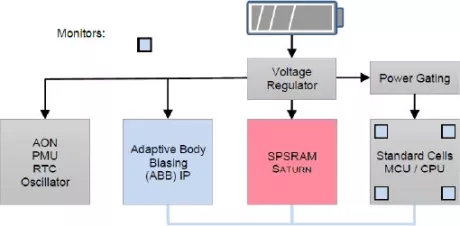
Low Power Memory Compiler - 1-Port Register File Compiler - GF 22nm FDX
- Specifically designed for ultra-low power applications, this memory leverages body biasing to dramatically reduce power consumption.
- Compatible with industry Adaptive Body Biasing IP for PVT and aging compensation
- Body Biasing functionality (up to +1.3V / -1.5V) to reduce leakage or increase speed at the same power
-
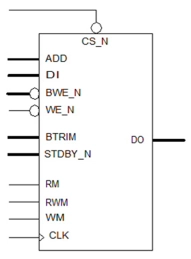
Single Port Low Leakage Register File Compiler - GF 22FDX+
- Ultra-Low Leakage: High VT (HVT) and low leakage HVT (LLHVT) devices used with source biasing to minimize standby currents while operating at low voltage.
- Bit Cell: Utilizes GlobalFoundries® Ultra-Low Leakage 6T (L110) bit cells to ensure high manufacturing yields.
- Four Power Modes: Active, Standby, Retention, and Power Off modes provide flexibility for power optimization
-
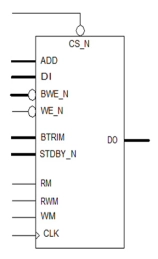
Single Port Low Leakage Register File Compiler - GF 22FDX+
- Ultra-Low Leakage: High VT (HVT) and low leakage HVT (LLHVT) devices used with source biasing to minimize standby currents while operating at low voltage
- Bit Cell: Utilizes GlobalFoundries® Ultra-Low Leakage 6T (P110UL) bit cells to ensure high manufacturing yields
- Four Power Modes: Active, Standby, Retention, and Power Off modes provide flexibility for power optimization
-
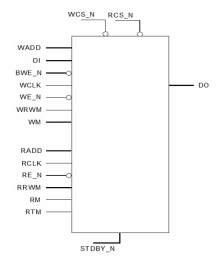
Dual Port (1 read only port, 1 write only port) Register File Compiler on N22ULL
- Ultra-Low Leakage: High VT (HVT) are used to minimize leakage performance.
- Bit Cell: Utilizes Foundries 8T bit cells to ensure high manufacturing yields
- Deep Sleep Mode Retains data a minimal power consumption.
-
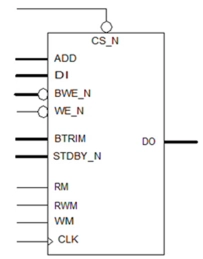
Single Port Register File Compiler on N22ULL
- Ultra-Low Leakage: High VT (HVT) are used to minimize leakage performance.
- Bit Cell: Utilizes Foundry’s 6T bit cells to ensure high manufacturing yields
- Deep Sleep Mode Retains data a minimal power consumption. Dedicated standby mode reduces power required to an absolute minimum to retain the memory contents.
-
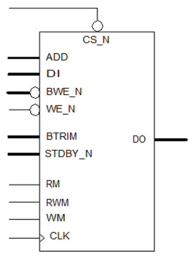
Single Port Low Leakage Register File Compiler - GF 22FDX
- Ultra-Low Leakage: High VT (HVT) and low leakage HVT (LLHVT) devices used with source biasing to minimize standby currents while operating at low voltage
- Bit Cell: Utilizes GlobalFoundries® Ultra-Low Leakage 6T (P110UL) bit cells to ensure high manufacturing yields
- Four Power Modes: Active, Standby, Retention, and Power Off modes provide flexibility for power optimization
-
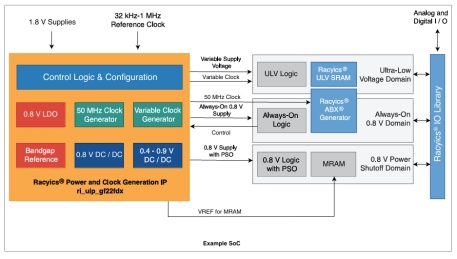
Power and Clock Generation IP - GLOBALFOUNDRIES® 22FDX®
- Tightly integrated power management platform with a soft-IP wrapper around Analog / Mixed-Signal hard macros which generate all supply voltages and clock signals needed to run highly efficient SoCs in GlobalFoundries® 22FDX®.
- Running from only one supply voltage and reference clock, the IP generates its own internal supplies and references, and those needed to run the Racyics® ABX® Generator.
-
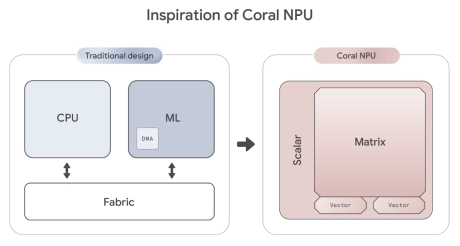
RISC-V-Based, Open Source AI Accelerator for the Edge
- Coral NPU is a machine learning (ML) accelerator core designed for energy-efficient AI at the edge.
- Based on the open hardware RISC-V ISA, it is available as validated open source IP, for commercial silicon integration.