DRAGO-3 Integrates SOC-E Technology for Its Space Communications
May 21, 2026 -- The Instituto de Astrofísica de Canarias (IAC), through IACTEC Space, continues to advance the development of its own space technologies with DRAGO-3, the new generation of infrared cameras designed for Earth observation from small satellites. This instrument represents a further step in the technological roadmap initiated with DRAGO-1 and DRAGO-2, two cameras that have already demonstrated in orbit the IAC’s capability to design, manufacture, verify and operate space payloads from the Canary Islands.
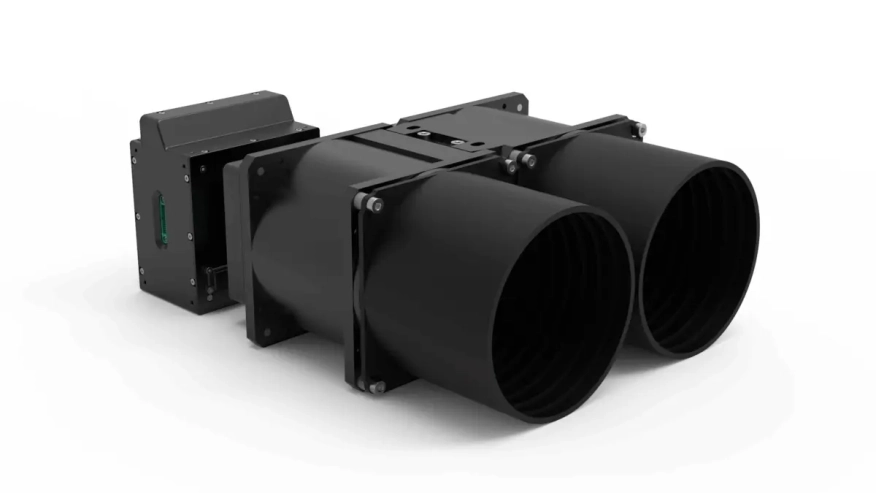 DRAGO cameras observe within the short-wave infrared range, commonly known as SWIR. This type of observation enables the capture of information beyond human visual perception and is particularly useful for scientific and societal applications related to land monitoring, wildfire tracking, volcanic activity, water resource management, crop moisture assessment, desertification processes and the detection of changes on the Earth’s surface.
Following the success of DRAGO-1 and DRAGO-2, which have delivered high-quality imagery from space, DRAGO-3 represents a significant evolution in terms of resolution, accuracy, versatility and integration capabilities for future satellite constellations. Its modular design is intended to facilitate adaptation to different platforms and missions, reinforcing the role of the Canary Islands as a strategic environment for the development of advanced, competitive and high value-added space technology.
A Camera Designed for Future Satellite Constellations
DRAGO-3 has been developed with the aim of providing a compact, efficient and high-performance solution for Earth observation from low Earth orbit. Its development falls within the activities of IACTEC Space, the IAC department specialising in technologies for small satellites, and forms part of a broader strategy to strengthen in-house capabilities in space instrumentation, data processing and observation missions.
The experience gained from previous DRAGO generations has enabled the team to progress towards increasingly robust instruments adapted to the needs of the New Space sector. In this context, DRAGO-3 not only enhances the technical capabilities of its predecessors but has also been conceived for integration into more complex satellite architectures, where communication between the payload, the onboard computer and other subsystems is critical.
These types of instruments must operate under demanding conditions, acquire data from sensors and reliably transmit information to external system elements. To achieve this, communication systems capable of ensuring efficient and standardised connectivity between the camera and external interfaces are essential.
SOC-E’s Contribution: SpaceWire Communication for DRAGO-3
For DRAGO-3, the IAC selected a SOC-E solution to implement communication between the camera and external systems through SpaceWire, a standard widely used in space systems for high-speed onboard data links in satellites and spacecraft. In simple terms, this technology acts as the interface enabling DRAGO-3 to exchange information with other platform subsystems, such as the onboard computer.
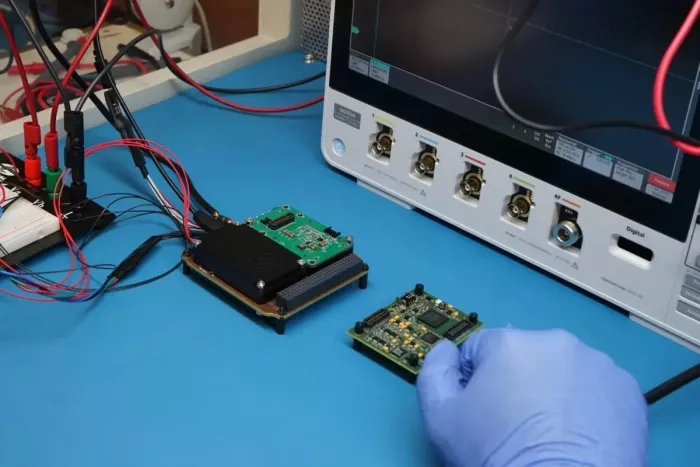
The selected solution is the SPWN module, a SpaceWire IP core developed by SOC-E, recognised for its performance, reliability and ease of integration. Unlike a conventional physical component, this is a logical solution integrated into DRAGO-3’s programmable chips.
Explore SpaceWire IP:
This integration enables the IACTEC Space team to incorporate a communications system compliant with an established space standard, while optimising the resources available within the instrument’s electronics. In a compact camera such as DRAGO-3, where volume, power consumption and efficiency are determining factors, solutions of this kind are especially relevant for maintaining high performance within a reduced form factor.
Cutting-Edge Space Technology
The incorporation of SOC-E technology into DRAGO-3 further strengthens the IAC’s ability to integrate specialised solutions into advanced space instruments. The project combines the expertise accumulated by IACTEC Space in optics, electronics, software, payload integration and verification with communication technologies specifically designed for space environments.
With DRAGO-3, the IAC continues to consolidate a line of work focused on developing compact, efficient infrared cameras prepared for future missions and constellations. This progress contributes to positioning the Canary Islands as an emerging hub within the space sector, capable of generating proprietary technology and collaborating with specialised companies to address the challenges of Earth observation from space.
Supporting the Next Generation of Space Missions
SOC-E’s participation in DRAGO-3 reflects its ongoing commitment to delivering high-performance communication technologies for demanding space applications. By providing solutions aligned with established industry standards such as SpaceWire, SOC-E contributes to enabling more capable, efficient and interoperable satellite systems.
Collaborations with organisations such as the IAC highlight the importance of combining specialised expertise to accelerate innovation in the space sector. As new missions and satellite constellations continue to emerge, SOC-E remains focused on developing technologies that support the evolving needs of space instrumentation and onboard communications.
Related Semiconductor IP
- SpaceWire Node IP core
- SpaceWire Verification IP
- SpaceWire IP core
- SpaceWire Verification IP
- SpaceWire Synthesizable Transactor
Related News
- SoC-e networking IP porfolio extends with SpaceWire: The standard for Spacecraft communication networks
- Aurelia Microelettronica provides a Development Suite for SpaceWire Remote Terminal Controller
- Aeroflex Gaisler announces SpaceWire Router IP-Core
- The new release of SoC-e IEEE 1588 IP Core supports 10 Gigabit Ethernet
Latest News
- Weebit Nano Q1 FY27 Activities Update
- INTERA Launches EAGLE Cognit, Bringing Ultra-Low-Power Near-Memory AI Acceleration to Next-Generation Edge Devices
- AeroTSN-EP in Action: SOC-E Brings Live Aerospace TSN Demonstration to A&D TSN Summit 2026
- Agnisys and Axiomise Collaborate to Accelerate NoC Design and Formal Sign-off
- TSMC Reports Third Quarter EPS of NT$29.43