Apple’s processor cadence: A pending stutter-step for improved long-term edge inference?
Apple Silicon’s success track record is indisputably impressive. It’s also rife with implementation inconsistency, albeit reflective in no small part of broader industry status impermanence.
By Brian Dipert, EDN
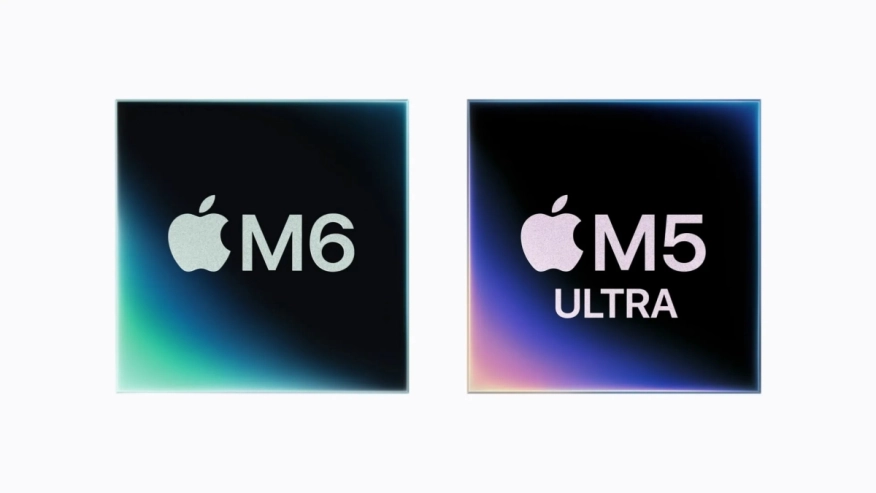
When Apple announced its computing platform migration from Intel x86 to homegrown Arm-based SoCs beginning in mid-2020, initial industry response was initially mixed. There was no shortage of schadenfreude, mind you, both considering that Intel had done the same thing to the IBM/Motorola PowerPC Alliance a decade and a half earlier, and more broadly Intel’s then-status as the predominant processor supplier to the computing segment. That said, and as was hopefully evident even in my earliest Apple Silicon era coverage, I was personally confident in the strategy’s sooner-or-later transition success, which is ironically winding up as we speak.
For one thing, Apple’s relationship with Intel was growing increasingly strained, as the chip supplier’s power consumption vs performance trends grew more worrisome, as new-product schedules slipped, and as the bugs in those products multiplied. For another, Apple and foundry partner TSMC (superseding initial partner Samsung) had for a while already been developing new SoCs for smartphones, tablets, smart watches and other devices. And then there’s Apple’s in-house vertical integration and control of both hardware and software, the latter spanning both operating systems and first-party applications and suites, as well as its exclusivity as provider of both developer tools and App Store approvals for third-party coders.
To read the full article, click here
Related Semiconductor IP
- MACsec Engine optimized for 10Base-T1S/T1L applications
- Dual Port, Voltage Scaling Register File Compiler on GF22FDX+
- Single Port, Voltage Scaling, High Speed SRAM Memory Compiler on GF22FDX+
- I3C Full Controller / Target
- I3C HCI Host Controller
Related News
- Apple completes its ARM lineup with 5nm, 134billion transistor M2 Ultra
- Noesis Technologies releases its Ultra High Speed FFT/IFFT processor IP Core
- Ultra Accelerator Link Consortium (UALink) Welcomes Alibaba, Apple and Synopsys to Board of Directors
- Apple unleashes M5, the next big leap in AI performance for Apple silicon
Latest News
- Nuclei Releases the NI1000 Series General-Purpose Compute Core with Support for the VME Matrix Extension
- OIF Publishes Common Electrical I/O (CEI) 6.0 IA with New 224G Long Reach and Medium Reach Specifications
- EnSilica to develop resilient GNSS ASIC for US$80 million programme
- Arm CEO Rene Haas affirms long-term commitment to lead company’s next phase of growth
- Quintauris and Siemens collaborates to accelerate the adoption of RISC-V-based solutions