Silicon Library: Notice of Stock Transfer
We are pleased to inform you that we have decided to transfer the shares of our company.
We would like to take this opportunity to thank you for your continued support.
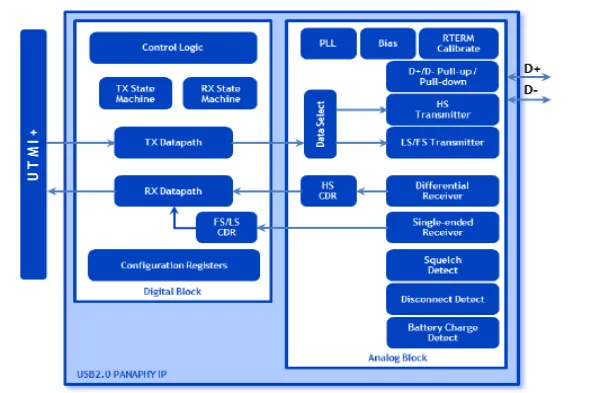
The USB2.0 PHY IP is a complete physical layer (PHY) IP solution designed for low power and peak performance.
The USB2.0 PHY IP is a complete physical layer (PHY) IP solution designed for low power and peak performance. The USB2.0 IP implements a High-Speed USB 2.0 transceiver for use with either host and device function controllers. Compliant with the UTMI+ level 3 specification, the USB2.0 PHY IP integrates mixed-signal circuits to support High-Speed data rate at 480Mbps and is backward compatible to Full-Speed (12Mbps) and Low-Speed (1.5Mbps) data rates. Targeting mobile and consumer product applications, the USB2.0 PHY IP also supports the supplementary USB Battery Charging specification.
Note: some files may require an NDA depending on provider policy.

USB2.0 PHY is a USB IP core from Silicon Library Inc. listed on Semi IP Hub.
Engineers should review the overview, key features, supported foundries and nodes, maturity, deliverables, and provider information before shortlisting this USB IP.
Yes. Buyers can compare this product with similar semiconductor IP cores or IP families based on category, provider, process options, and structured technical specifications.