Vendor: Brite Semiconductor Category: Single-Protocol PHY

USB PHY Solution

Brite provides USB2.0 OTG PHY which is a mixed-signal IP solution designed to implement OTG connectivity for a System-on-Chip (So…

Overview

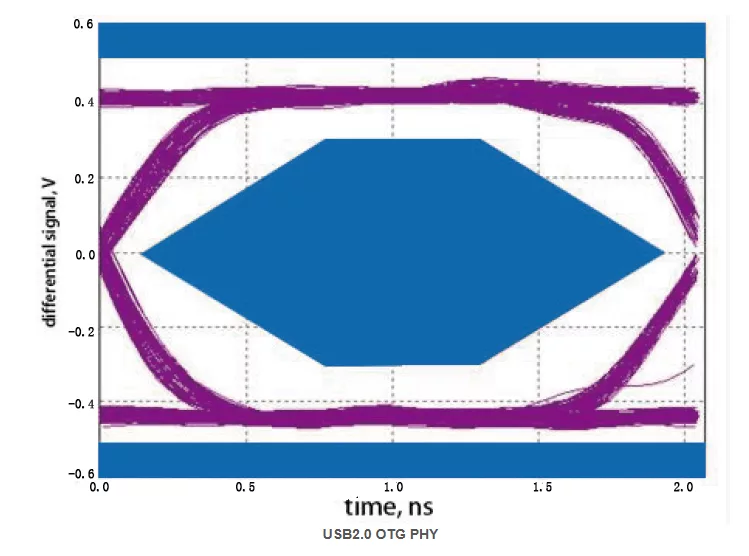
Brite provides USB2.0 OTG PHY which is a complete mixed-signal IP solution designed to implement OTG connectivity for a System-on-Chip (SoC) design. The USB2.0 OTG PHY supports the USB2.0 480Mbps protocol and data rate, and is backward compatible with the USB 1.1 1.5Mbps and 12Mbps protocol and data rates. It has been verified by a number of end products, especially suitable for the current popular internet of things applications.

Key features

  • Supports High-speed, Full-Speed and Low-Speed data rates
  • Supports Host, Peripherals and OTG application
  • Fully Compliant with UTMI + Level 3 Specification
  • Supports internal PLL for High-Speed(480MHz) Clock and Data Recovery operation
  • Support Built in Self-Test(BIST) for production testing
  • Including digital and analog loop back test for HS/FS/LS mode to facilitate testing and debugging
  • Integrated Termination Resistors (50Ω, 1.5K, 15K) with auto calibration to meet high accuracy
  • Support 8-bit 60MHz and 16-bit 30MHz parallel interface
  • Clock and Data Recovery implemented fully by adjustable digital with edge detection to maximizing noise filtering for various applications
  • Area and power consumption advantage over competitors

Block Diagram

What’s Included?

  • Datasheet
  • User's Manual
  • Package/PCB guideline
  • SDK (standard design kit) including verilog model, .lib/.db file, .lef file

Specifications

Identity

Part Number
YouUSB
Vendor
Brite Semiconductor
Type
Silicon IP

Provider

Learn more about Single-Protocol PHY IP core

Brite Semiconductor Releases 28nm High-Performance SAR ADC IP, Driving Upgrades for High-Speed Signal Chain Applications

The 12-bit, 125Msps SAR ADC IPs deliver an ENOB ≥ 10.5 bit, SFDR ≥ 82.5 dB, and THD≤ ‑77.2 dB. Featuring a differential input design with high common-mode rejection ratio (CMRR), the IPs achieve an excellent anti‑interference performance, enabling precise capture of high-speed communication signals and reduced system bit error rates to meet signal acquisition requirements of communication transceivers.

Brite Semiconductor Releases PCIe 4.0 PHY IP

The PHY IP complies with PCIe 4.0 specifications, supports PIPE 4.4.1/5.2 interface and data transmission rates ranging from 2.5Gbps to 16Gbps, fully covering PCIe Gen4.0/3.0/2.0/1.0 standards, and is compatible with other protocols, such as Rapid IO, JESD204B/C, USB3.2/3.1/3.0, and 10GBASE-R/KR‌.

Brite Semiconductor Releases TCAM IP based on 28HKC+ Process

This IP has the features of high frequency and low power consumption. With the increasing demand for efficient lookup in network devices, such as fast processing of routing tables and Access Control Lists (ACLs), this IP will be widely adopted in chips for high-end switches, routers, etc.

Brite Semiconductor Releases DDR3/4, LPDDR3/4 Combo IP

Brite Semiconductor today announced the launch of DDR3/4, LPDDR3/4 Combo IP. Developed on 28HKD 0.9V/2.5V platform, this IP has extensive protocol compatibility, supporting DDR3, DDR3L, DDR4 and LPDDR3, LPDDR4 protocols. It achieves data transfer rates up to 2667Mbps and supports multiple data width configurations, including X16, X32, and X64.

Brite Semiconductor Provides MIPI IP Total Solution

Brite Semiconductor today announced providing MIPI IP total solution for custom ASIC/SoC design service. This solution consists of a series of MIPI controller and PHY. It will help the System Manufacturer and IC companies to design high quality ASIC/SoC products while speeding up time to market.

Frequently asked questions about Single-Protocol PHY IP

What is USB PHY Solution?

USB PHY Solution is a Single-Protocol PHY IP core from Brite Semiconductor listed on Semi IP Hub.

How should engineers evaluate this Single-Protocol PHY?

Engineers should review the overview, key features, supported foundries and nodes, maturity, deliverables, and provider information before shortlisting this Single-Protocol PHY IP.

Can this semiconductor IP be compared with similar products?

Yes. Buyers can compare this product with similar semiconductor IP cores or IP families based on category, provider, process options, and structured technical specifications.

×
Semiconductor IP