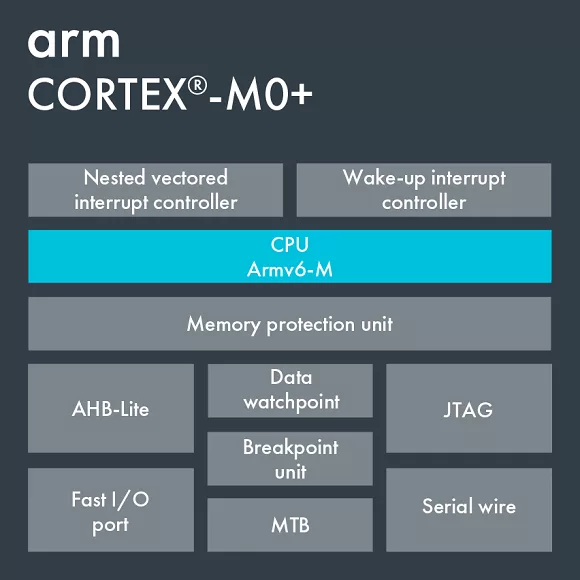
Overview
The Cortex-M0+ processor builds on the very successful Cortex-M0 processor, retaining full instruction set and tool compatibility, while further reducing energy consumption and increasing performance. Along with the Cortex-M0 processor, the exceptionally small silicon area, low power and minimal code footprint of these processors enable developers to achieve 32-bit performance at an 8-bit price point, bypassing the step to 16-bit devices. The Cortex-M0+ processor comes with a wide selection of options to provide flexible development.
Learn more about CPU IP core
Protocol bridge verification is a persistent bottleneck in SoC development: for every new bridge instance, engineers hand-craft a full UVM testbench from scratch, consuming 40-100 engineering hours of bring-up effort. The authors presents an agentic Python framework that generates complete, protocol-aware UVM testbenches for arbitrary IP and subsystem configurations from a structured Verification Manifest—a JSON specification encoding interface topology, protocol semantics, and coverage intent.
Arm-based Google Axion host processors extend their role across Google’s TPU portfolio to deliver the high performance and energy efficiency required for demanding AI workloads.
Arm Flexible Access continues to grow, with over 300 active members and more than 500 unique tape-outs, while Arm Total Access now enables 60 partners and has supported more than 600 projects since launch
Arm and STMicroelectronics are building on decades of Arm Cortex-M innovation to bring intelligence closer to where machines interact with the physical world.
Arm Q2 FYE27 quarterly earnings mark fifth consecutive quarter of total revenue growth exceeding 20% year over year.
From new Arm-based silicon and PCs to thousands of applications, Arm is reshaping the next era of personal computing.