Agentic AI, Multi‑Physics, and Standards Will Redefine Chips Design
In this roundup from DAC 2026 in Long Beach, California, we examine some of the underlying themes behind the agentic AI trend that is sweeping the industry.
By Nitin Dahad, EE Times | August 11, 2026
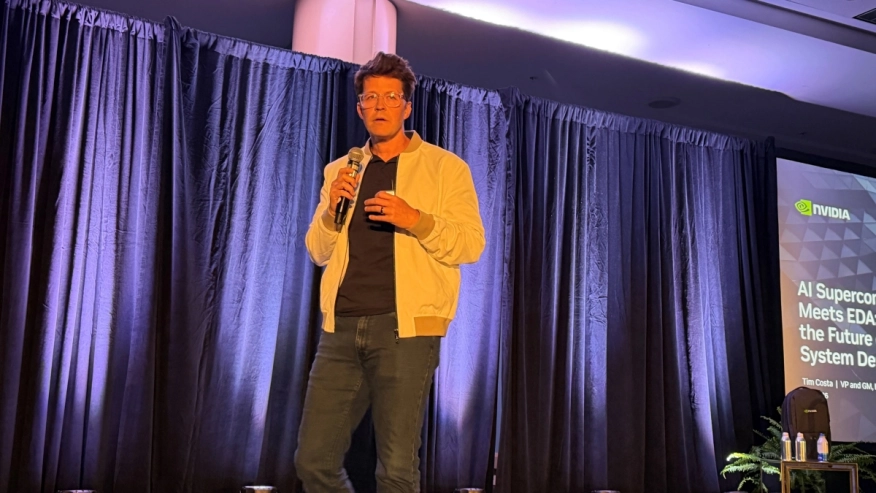
If DAC 2025 was about agentic AI arriving in electronic design, DAC 2026 was about making it work in the reality of silicon‑to‑systems engineering. Across the show floor and executive interviews, three themes dominated: agentic AI as the new automation layer, multi‑physics as the defining bottleneck, and standards as the glue that will make it all interoperable at scale.
It was also a year in which EDA veterans started talking seriously about unconventional compute and quantum computing as part of the longer‑term path to keep engineering progress from stalling under its own power and complexity demands.
To read the full article, click here
Related Semiconductor IP
- nQrux® Root of Trust IP
- AXI to UCIe Bridge IP
- UCIe 2.x Controller IP
- SWI3S (SoundWire I3S Interface) Peripheral Controller Core IP
- OpenTitan-based RISC-V Secure Element
Related News
- Rapidus and Cadence Partner on Agentic AI for Advanced SoC Design
- Siemens advances self-verifying agentic AI workflows for semiconductor and PCB design
- Synopsys Advances Agentic AI Chip Design with AMD and Microsoft
- Synopsys and TSMC Partner to Accelerate AI Systems Innovation with Agentic AI and Advanced Design
Latest News
- Year-to-Date Global Semiconductor Sales Top $1 Trillion Through August
- Xiphera launches nQrux® Root of Trust with Post-Quantum Cryptography
- Skyechip Joins Rapidus Core Ecosystem, Bringing Advanced Silicon IP For AI and HPC to Japan's 2nm Platform
- GUC Monthly Sales Report – September 2026
- Rapidus Unveils “Rapidus CORE”, New Global Ecosystem Framework Supporting the Development and Mass Production of Cutting-Edge Semiconductors