When Your IP Vendor Has Operated 150,000 Base Stations: Introducing Viettel Semiconductor

There is a recurring frustration among SoC and system architects sourcing RF and baseband IP: the gap between what a datasheet promises and what a chip delivers in a real deployment environment. Lab-characterized performance rarely survives contact with the interference profiles, temperature cycling, and regulatory variability of an actual live network.
Viettel Semiconductor (VSI) was built inside an organization that has no choice but to close that gap.
The Viettel Group context
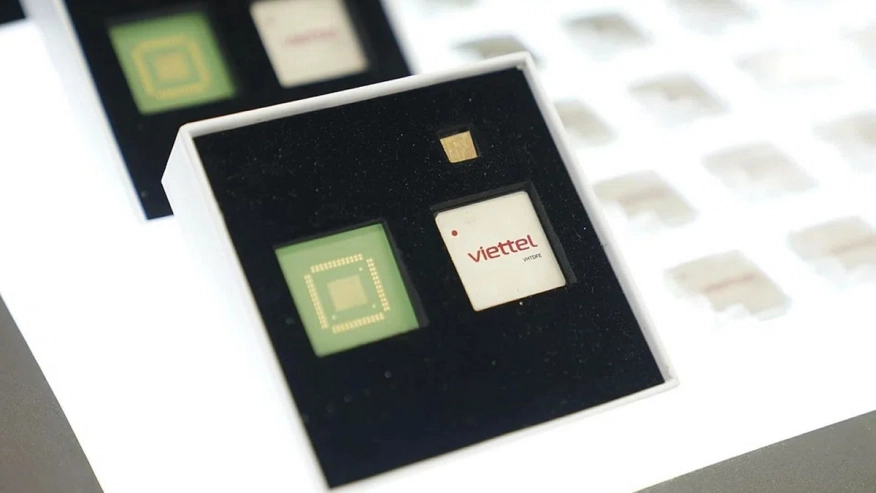 Viettel Group is Vietnam's largest telecommunications operator and one of Southeast Asia's most extensive mobile network owners, with commercial operations across 10 countries spanning Asia, Africa, and Latin America — including markets in Mozambique, Tanzania, Burundi, Cambodia, Laos, East Timor, Peru, and Haiti. Viettel designed, built, and currently operates infrastructure across all of these environments: different spectrum allocations, different interference profiles, different power grid stability, different climatic conditions.
VSI is the semiconductor design arm of this organization. The practical implication is straightforward: when VSI characterizes an RF front-end IP block, the application requirements driving that characterization come from engineers who have spent years debugging why a theoretically adequate system underperforms in a real deployment. That operational feedback loop is not something that can be replicated by a pure-play IP house working from published standards documents alone.
What VSI is bringing to market
VSI's current IP portfolio spans two domains that rarely appear from the same vendor.
The first is compound semiconductor RF IP for radar and defense applications — a family of GaN-on-SiC power amplifiers, integrated front-end modules (FEMs), beamforming cores, and T/R switches covering X-band (8–11 GHz), C-band (5.2–5.7 GHz), Ku-band (13.5–15.5 GHz), and Ka-band (34–36 GHz). These are silicon-proven designs, not paper IP: the X-band FEM family (VPF1005 at 37 dBm and VPF1010 at 40 dBm) integrates PA, LNA, and T/R switch on a single GaN-on-SiC 250 nm die in a QFN 7×5 package — a complete single-chip transmit/receive channel for AESA phased-array applications.
The second is analog and digital IP for 5G infrastructure — a suite covering the full signal chain from RF front-end to digital baseband: a silicon-proven 5G FR1 direct-conversion receiver (0.3–6 GHz, TSMC 28HPC+), a fractional-N PLL with dual VCOs (TSMC 28nm), a 100 MHz bandwidth CT-DSM ADC (UMC 28nm), and a digital baseband library including LDPC (5G NR + Wi-Fi 7), Polar code (3GPP Release 18), LTE/WiMax Turbo codes, DUC/DDC, CFR, and a complete 8×8 TDD 5G gNB digital front-end SoC IP. The RISC-V and DSP processor cores complement the suite for embedded control applications.
Why this matters for the IP ecosystem
The compound semiconductor IP market — particularly GaN for radar and mmWave — has historically been dominated by vertically integrated IDMs (Wolfspeed, Qorvo, MACOM, Northrop Grumman) who develop and manufacture primarily for internal use or under restrictive licensing. Pure-play compound semiconductor foundries like WIN Semiconductors and Wolfspeed have PDKs available, but licensed hard-macro IP specifically designed for AESA T/R modules — with integrated PA, LNA, and switch — is genuinely scarce in open IP catalogues.
VSI's entry into this space, with production-ready GaN FEM IP, represents an unusual opportunity for radar and defense SoC teams who currently face the choice between expensive custom development and the limited catalogue options available from Western IP vendors facing their own export control constraints.
Related Semiconductor IP
- 6 Mhz to 5.8Ghz RF Power Amplifer
- CC-100IP-RF Analog and RF Sensitivity Enhancement IP
- Wi-Fi 7(be) RF Transceiver IP in TSMC 22nm
- Wi-Fi 6 (ax)+BLEv5.4+15.4 Dual Band RF IP for High-End Applications.
- All Digital Fractional-N RF Frequency Synthesizer PLL in TSMC N6/N7
Related Blogs
- Why SAR Radar Is Driving Renewed Demand for C-Band GaN and GaAs Front-End IP
- World IP Day: A Time to Reflect on the Value of Semiconductor IP
- The Blind Spot of Semiconductor IP Sales
- Designing the Beam Steering Core for a C-Band AESA: A Look at VSI's VBF0644 GaAs Beamformer IC
Latest Blogs
- Tape-Out Readiness Checklist: Engineering Decisions That Prevent Costly Respins
- How Cadence DSPs Put In-Cabin AI Audio On-Chip in SemiDrive's X10
- The Fastest Path to Scalable Photonic Systems: Using Proven IP for both PIC and EIC designs
- Building Trusted AI Agents from the Silicon Root of Trust
- Heterogeneous Computing in Space