Jevons’ Paradox and the Silicon Roadmap

AI usage may expand with more efficient models and hardware, just as Jevons would predict. But the silicon roadmap adds a layer of complexity to the market prediction.
Gartner vs Jevons
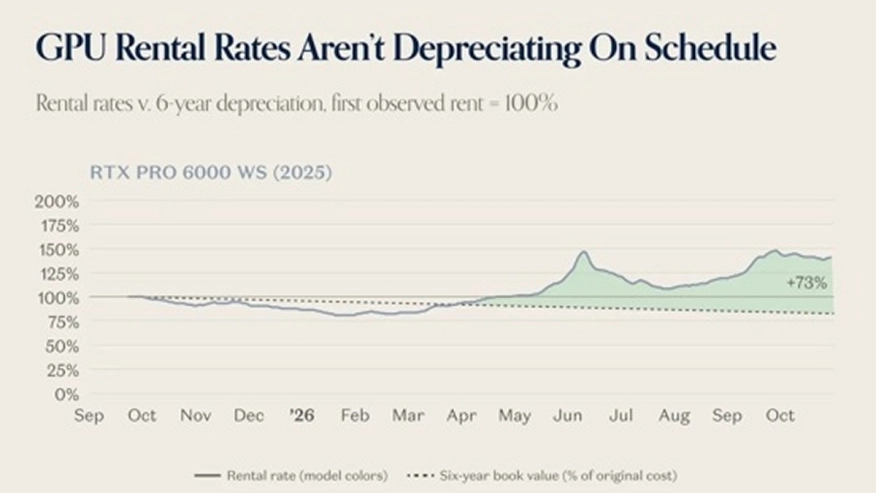 A couple of weeks ago, Gartner published a forecast that raises concerns about AI infrastructure. AI providers will spend close to $1 trillion on infrastructure in 2026 and another $6 trillion between 2027 and 2030. To pay for that, cover the cost of borrowing, and still earn a 12% return, the owners of AI data centers would need about $8.5 trillion in revenue through 2030. Gartner expects the AI revenue that actually reaches those data centers to be $3.6 trillion at most. On that arithmetic, says Gartner, more than $3.5 trillion of this spending could be exposed to write-downs by 2030, and more than 80% of neoclouds will no longer exist as independent companies. That is a risk estimate under Gartner’s assumptions, not a prediction that the full amount will be written off.
On the other hand, IMHO, this math assumes that AI will continue to be deployed in a similar use and business model as today. However, we might well be only at the beginning of the AI use curve. And, according to the by-now very well-known Jevons paradox, the more a technology is available, the more people will find new use-models for that technology, and therefore, even if the technology price goes down, the revenue from the aggregated usage can go up. As an illustration, when cars become more fuel-efficient, each kilometer costs less, so people drive more, take longer trips, and may end up buying more fuel in total. Cheaper petrol works in a similar way: When its price falls, people drive more, and when it rises, some prefer public transportation.
To read the full article, click here
Related Semiconductor IP
- 100-10Gbps Ethernet MAC Controller
- SD Card Controller
- AXI4 Memory Controller IP Core
- AXI-Lite I2C Controller Core
- LVDS Transceiver IP core
Related Blogs
- The silicon behind Android
- Fab allocation back on the agenda
- Open-Silicon adds Silicon Logic Engineering - for a good reason
- What's happening on the 450mm wafer front?