CDM Dependence on Device Capacitance
This blog will focus on what happens during the CDM pulse itself, and will show how the pulse properties change as a function of DUT to Field Plate capacitance.
A 2Gbps SLVS Tranceiver in TSMC 28nm This 1.8V SLVS transceiver is a high-performance, low-power I/O solution optimized for TSMCs…
A 2Gbps SLVS Tranceiver in TSMC 28nm
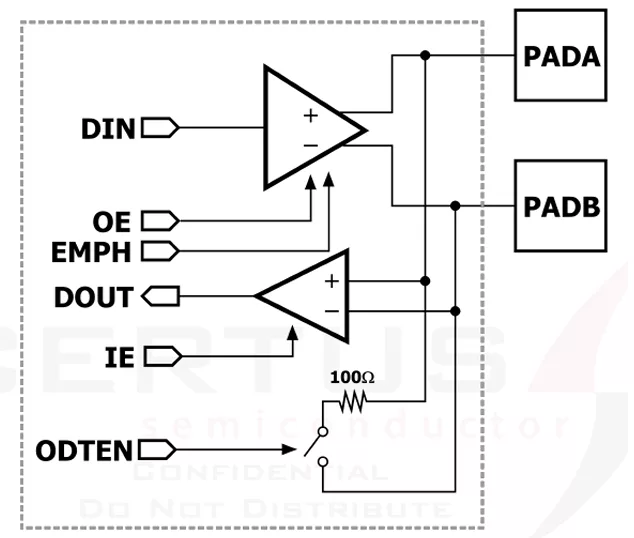
This 1.8V SLVS transceiver is a high-performance, low-power I/O solution optimized for TSMCs 28nm process. Designed with 1.8V thick oxide devices and a standard low-voltage core interface at 0.8V, this transceiver ensures robust operation across a wide temperature range (-40°C to 125°C). Supporting high-speed differential signaling up to 2Gbps, it delivers ex- ceptional signal integrity with low jitter and precise eye diagrams. With built-in ESD protection (+2kV HBM, +500V CDM) and on-die termination options, this SLVS I/O is ideal for high-reliability applications requiring power efficiency and strong noise immunity. Whether used in high-speed data transfer, imaging systems, or communication interfaces, Certus Semiconductors SLVS solution offers the performance and reliability needed for next-generation designs.
Operating Conditions
| Parameter | Value |
| Devices | 1.8V Thick and 0.9V Thin Oxides |
| BEOL | 8 Metals Min. |
| VDDIO | 1.8V |
| VDD | 0.8V |
| Temperature | -40C to 125C |
| ESD | +2kV HBM, +500V CDM |
| Foundry | Node | Process | Maturity |
|---|---|---|---|
| TSMC | 28nm | 28nm 280 nm | — |
Note: some files may require an NDA depending on provider policy.

SLVS Transceiver in TSMC 28nm is a SLVS-EC IP core from Certus Semiconductor listed on Semi IP Hub. It is listed with support for tsmc.
Engineers should review the overview, key features, supported foundries and nodes, maturity, deliverables, and provider information before shortlisting this SLVS-EC IP.
Yes. Buyers can compare this product with similar semiconductor IP cores or IP families based on category, provider, process options, and structured technical specifications.