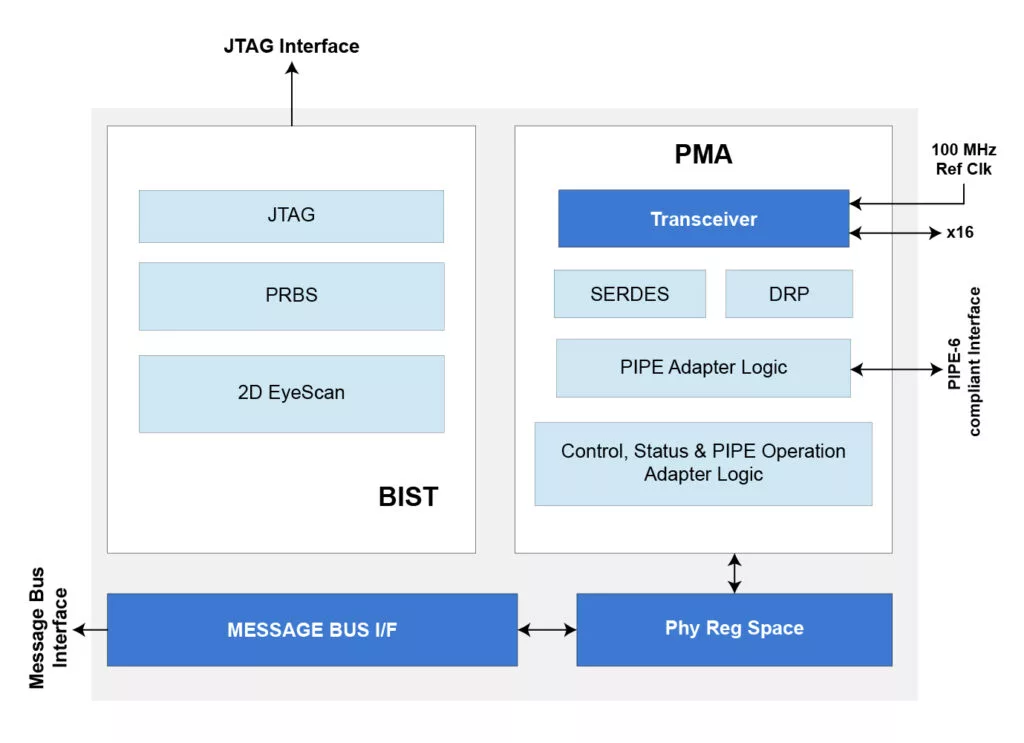
Learn more about Single-Protocol PHY IP core
L‑QNTX spans licensable cryptographic Soft IP for FPGA and ASIC integration, embedded hardware root of trust, PCIe security platforms and network-attached Hardware Security Modules (HSMs), providing a common crypto-agile security architecture from silicon to infrastructure.
Sunil Kar is a US-based semiconductor leader with over 30 years of experience in driving growth, innovation, and global operations. He has held senior leadership roles at Xilinx (now AMD), IDT (now Renesas), Ascenium, NetLogic (acquired by Broadcom), and NEC (Japan).
Logic Fruit Technologies, a leading provider of cutting-edge FPGA-based solutions, proudly announces the release of its latest High-Speed Interface IP stack, including PCIe Gen6 Controller IP, PCIe Gen6 PHY IP, and CXL 3 Controller IP.
Paras Defence and Space Technologies Ltd., a leading player in the defense and aerospace sector, has made a strategic investment in Logic Fruit Technologies Pvt. Ltd. by acquiring a minority stake as part of Logic Fruit’s maiden investment round.
Logic Fruit Technologies is excited to announce the launch of our latest innovation, the Kritin iXD 6U VPX SINGLE BOARD COMPUTER (SBC).
Logic Fruit Technologies INC is thrilled to announce the appointment of Mr. Akshaya Sharma (Akki) as the Chief Executive Officer (CEO) of Logic Fruit Technologies INC, overseeing our US operations.