ONFI 5.2: What’s new in Open NAND Flash Interface's latest 5.2 standard
ONFI 5.2 is the latest generation of ONFI device standard, published in 2024. ONFI 5.2 devices have added several major features over previous generation ONFI standards.
Supports ONFI 5.1/5.2/6.0 Specification and NV-DDR3/NV-LPDDR4 up to 3600/4800/5600/6400 Mbps
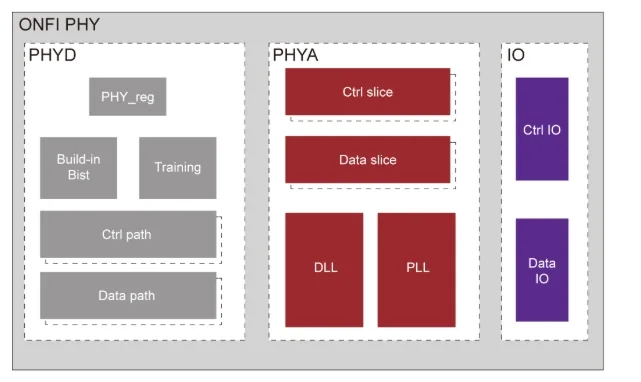
MSquare offers a silicon-proven ONFI 6.0 PHY IP that supports all modes of the Open NAND Flash Interface (ONFI) 6.0 specification. ONFI is an interface that connects external flash particles (NAND Flash) and internal flash controller (NAND Controller), commonly used in Solid State Drives (SSD) and embedded memory (eMMC) products. To facilitate customer implementation, the MSquare's ONFI 6.0PHY supports expandable channels and customizable CE/RB Pad Numbers.
Note: some files may require an NDA depending on provider policy.

ONFI 6.0 PHY is a NAND Flash IP core from MSquare listed on Semi IP Hub.
Engineers should review the overview, key features, supported foundries and nodes, maturity, deliverables, and provider information before shortlisting this NAND Flash IP.
Yes. Buyers can compare this product with similar semiconductor IP cores or IP families based on category, provider, process options, and structured technical specifications.