What is Low Pin Count (LPC) controller verification IP?
Low Pin Count (LPC) controller verification IP is a LPC IP core from MAXVY Technologies Pvt Ltd listed on Semi IP Hub.
The Low Pin Count (LPC) interface is a low bandwidth bus with up to 33 MHz performance.
The Low Pin Count (LPC) interface is a low bandwidth bus with up to 33 MHz performance. It is used to connect peripherals around the CPU and to replace the Industry Standard Architecture (ISA) bus which can only run up to 8 MHz. The primary benefit is that signals can be transmitted across a minimum of seven traces for an LPC bus versus 52 traces for an ISA bus. This relieves the pressure of routing on the often-congested motherboard and at the same time improves the overall system integrity.
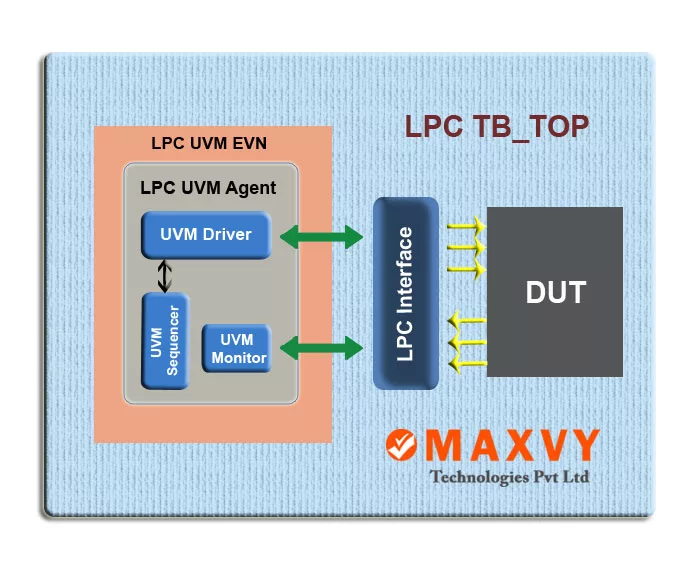
Note: some files may require an NDA depending on provider policy.

Low Pin Count (LPC) controller verification IP is a LPC IP core from MAXVY Technologies Pvt Ltd listed on Semi IP Hub.
Engineers should review the overview, key features, supported foundries and nodes, maturity, deliverables, and provider information before shortlisting this LPC IP.
Yes. Buyers can compare this product with similar semiconductor IP cores or IP families based on category, provider, process options, and structured technical specifications.