GPUs Dominate AI Compute, FPGAs Move Into the AI Data Path
As AI moves beyond data centers, system constraints are redefining where reconfigurable hardware belongs.
By Yashasvini Razdan, EE Times | January 20, 2026
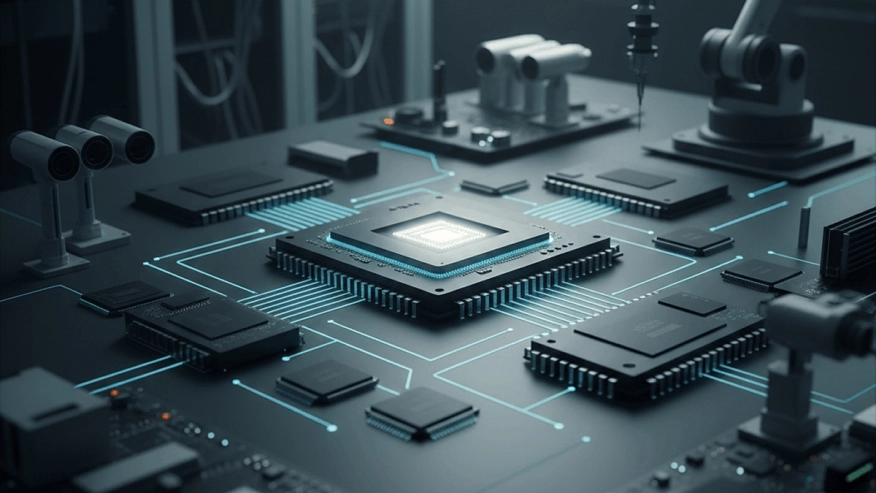
FPGAs offer programmable and flexible hardware design but require longer design cycles than CPU- or GPU-based systems. As AI workloads scale and push for higher compute density, faster time to deployment, and lower energy per operation in latency- and control-bound workloads, do FPGAs still make sense in the AI stack?
In an interview with EE Times, Esam Elashmawi, chief strategy and marketing officer at Lattice Semiconductor, said FPGAs do not compete with GPUs for AI compute but instead operate as companion devices in the data path, particularly at the edge. “If you need very high performance and you are willing to live with high power, then you can use a GPU or a CPU,” he said. “FPGAs are a good companion to it.”
To read the full article, click here
Related Semiconductor IP
- Generative AI Edge Processor
- AXI NoC Non-Coherent Mesh
- CXS c/d/Lite Verification IP
- USB OTG 2.0 with xHCI Verification IP
- DDR5 RDIMM Verification IP
Related News
- Achronix Releases Groundbreaking Speedster AC7t800 Mid-Range FPGA, Driving Innovation in AI/ML, 5G/6G and Data Center Applications
- Alchip Leverages AWS to Enable Cloud-Based Silicon Execution for AI and Data Center Platform
- Efinix® Launches Titanium Edge™ FPGA Family, Solving the Demanding Requirements of Edge AI
- RISC-V Targets Data Centers, Edge AI, Space
Latest News
- Agnisys and Axiomise Collaborate to Accelerate NoC Design and Formal Sign-off
- TSMC Reports Third Quarter EPS of NT$29.43
- ChipAgents Collaborates With NVIDIA to Launch Build-A-Chip-Bench for Autonomous Chip Design and Implementation
- Quintauris and Microchip Technology join forces to grow RISC-V® adoption
- BrainChip Launches Sequora: Edge AI That Doesn’t Just Recognize — It Understands and Responds