Would custom memory ease your SoC design?

Memory customization is not always a top priority when a design team plans a new system-on-chip (SoC) project. But often it should be.
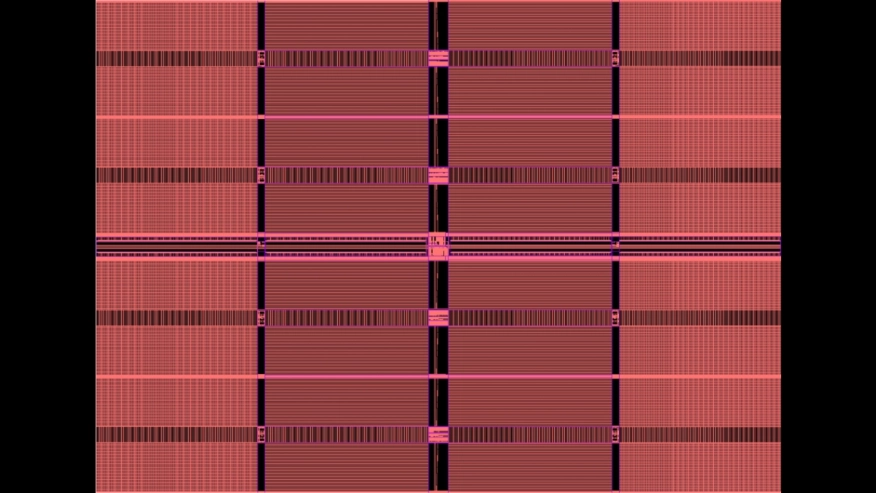 This may not be an obvious statement. Granted, SRAM claims a lot of area on most SoCs. The speed and power consumption of SRAM arrays can affect the overall chip performance and energy efficiency.
But today’s memory compilers are flexible tools that support a variety of cell designs. At Faraday, for example, the 14FFC compiler offers eight variants, tuned to diverse needs, ranging from high-density to high-performance to ultra-low-power. So why do you consider custom memory?
One answer to the above question is the need for an unusual word or bit length. Relatively simple customization can produce the exact SRAM configuration required for a specific instance, not just the compiler’s closest approximation.
Similarly, there are times during floorplanning—or, more concerningly, during timing closure—when giving an SRAM instance an unusual aspect ratio can ease a difficult situation. This may be a more complex customization, requiring changes to array layout and routing, multiplexers, drivers, and cell designs.
To read the full article, click here
Related Semiconductor IP
- Global Foundries 55nm LowPower LowK Process synchronous high density low power dual port SRAM memory compiler.
- UMC 80nm Embedded High Voltage process standard synchronous high density single port SRAM memory compiler with redundancy.
- HJTC 0.11um uLL/pFlash via1 ROM memory compiler.
- UMC 28nm HPC process standard synchronous high density dual port SRAM memory compiler.
- SD Memory Slave Controller
Related Blogs
- What's a memory booster, and how does it ease SoC bottlenecks
- How to Augment SoC Development to Conquer Your Design Hurdles
- Boost SoC Flexibility: 4 Design Tips for Memory Subsystems with Combo DDR3/4 Interfaces
- Customer Spotlight: Viettel Accelerates Design of Its First 5G SoC with Synopsys ASIP Designer
Latest Blogs
- Trusted AI Agents Must Be Anchored in Silicon
- Inside Arm CSS for Mobile 2: The AI-native compute platform for mobile
- Tape-Out Readiness Checklist: Engineering Decisions That Prevent Costly Respins
- How Cadence DSPs Put In-Cabin AI Audio On-Chip in SemiDrive's X10
- The Fastest Path to Scalable Photonic Systems: Using Proven IP for both PIC and EIC designs