Vendor: M31 Technology Corp. Category: Single-Protocol PHY

USB2.0 build-in clock PHY, TSMC 110g

In USB product series, M31 not only provides customers with a standard USB PHY solution, but also offers a unique BCK function.

Overview

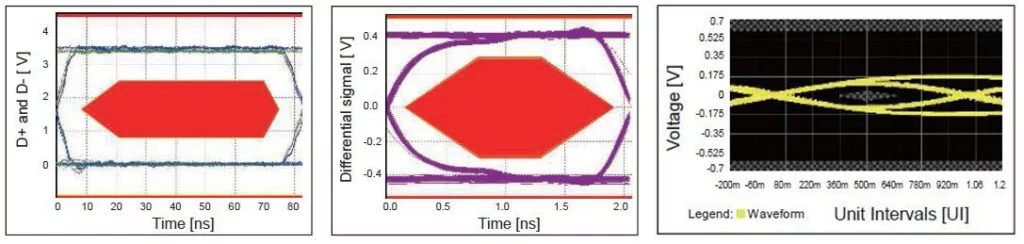
In USB product series, M31 not only provides customers with a standard USB PHY solution, but also offers a unique BCK function. M31’s patented BCK (Built-in-Clock, a.k.a. Crystal-less) technology is an innovative way to save BOM(Bill of Materials) cost by reducing an external crystal for mobile USB devices. In general, this solution has been popularly adopted by those USB devices in applications like flash drive, wireless transmitter, sound card, webcam. During USB data transfer, the IP performs a background calibration to ensure frequency accuracy. The USB IP with BCK complies with the USB-IF specification and has the same electrical performance as the standard USB IP.

Key features

  • Smallest USB 3.2 Gen1x1 BCK PHY IP worldwide (e.g. IP size @40nm <0.36mm²)
  • Fully compliant with Universal Serial Bus USB 3.2 Gen1x1, 2.0, and 1.1 electrical specifications
  • Supports clock outputs from the internal BCK module
  • Real-time calibrations to ensure frequency accuracy
  • Data UI (unit interval) is well-controlled within ±500ppm during data transfer
  • Concise and explicit design structure to ease the IP integration

Block Diagram

Specifications

Identity

Part Number
USB2.0 build-in clock PHY, TSMC 110g
Vendor
M31 Technology Corp.
Type
Silicon IP

Standards & Interfaces

Supported Standards
USB 2.0

Files

Note: some files may require an NDA depending on provider policy.

Provider

Learn more about Single-Protocol PHY IP core

M31 High-Speed and Long-Channel MIPI C/D-PHY Solution on TSMC N3P/N3C

With the rapid growth of AR/VR and high-resolution imaging systems such as drones and action cameras, MIPI CSI (Camera Serial Interface) and MIPI DSI (Display Serial Interface) require both high data throughput and low power consumption. M31 provides a MIPI C-PHY and D-PHY IP combo solution implemented on TSMC N3P and N3C processes.

High-Speed PCIe and SSD Development and Challenges

PCIe stands for Peripheral Component Interconnect Express (PCIe), which is a very important specification in computer buses. It is widely used in a large number of applications for data exchange communication within computer components, such as network cards, graphics cards, and nowadays NVMe solid state drives, which are mostly connected to the motherboard via PCIe. Since its introduction in 2003, PCIe has evolved into a fifth or even sixth-generation specification.

Mastering Key Technologies to Realize the Dream - M31 IP Integration Services

Throughout the development of the industry, the evolution of advanced semiconductor manufacturing processes has led to an increase in production costs, high-speed interface bandwidth, and the difficulty and risk in IP and SoC integration. That results in a significant increase in development costs for chip manufacturers, especially in the investment of manpower, and EDA tools are becoming more challenging.

M31 on the Specification and Development of MIPI Physical Layer

MIPI is the abbreviation of "Mobile Industry Processor Interface". This article will introduce the physical layer specifications of MIPI architecture, and explain the features and benefits of D-PHY and C-PHY respectively. Then, the MIPI perspective on the development and challenges of automotive electronics and the professional MIPI technical services that M31 can provide will be shared.

Frequently asked questions about Single-Protocol PHY IP

What is USB2.0 build-in clock PHY, TSMC 110g?

USB2.0 build-in clock PHY, TSMC 110g is a Single-Protocol PHY IP core from M31 Technology Corp. listed on Semi IP Hub.

How should engineers evaluate this Single-Protocol PHY?

Engineers should review the overview, key features, supported foundries and nodes, maturity, deliverables, and provider information before shortlisting this Single-Protocol PHY IP.

Can this semiconductor IP be compared with similar products?

Yes. Buyers can compare this product with similar semiconductor IP cores or IP families based on category, provider, process options, and structured technical specifications.

×
Semiconductor IP