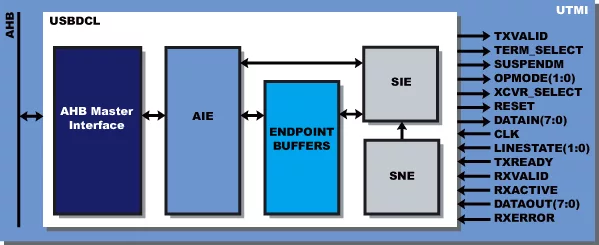
Learn more about USB IP core
The objective is to develop a 7nm test chip as a key milestone towards the development of a future European high performance space microprocessor (known as GR7xV space microprocessor) based on the RISC-V open instruction set architecture.
Frontgrade Gaisler is proud to support the European Union and the European Defence Fund with our fault-tolerant RISC-V microprocessor technology for the creation of European semiconductor supply and value chains.
Central to the project is the Frontgrade Gaisler GR801, a next-generation processing platform that uniquely combines a radiation-tolerant NOEL-V RISC-V processor with BrainChip’s Akida neuromorphic processing engine, enabling reliable onboard inference at low power.
Frontgrade Gaisler and DELTATEC are pleased to celebrate their successful collaboration in delivering high-performance computing solutions for space applications, with the GR712RC dual-core microprocessor at the heart of several flight-proven systems.
The agreement establishes a framework for collaboration in developing and validating advanced on-board computing architectures designed to increase the autonomy and resilience of future space missions.
This joint effort will combine Frontgrade Gaisler's radiation-hardened electronics with wolfSSL's security software libraries.