Learn more about Oscillator IP core
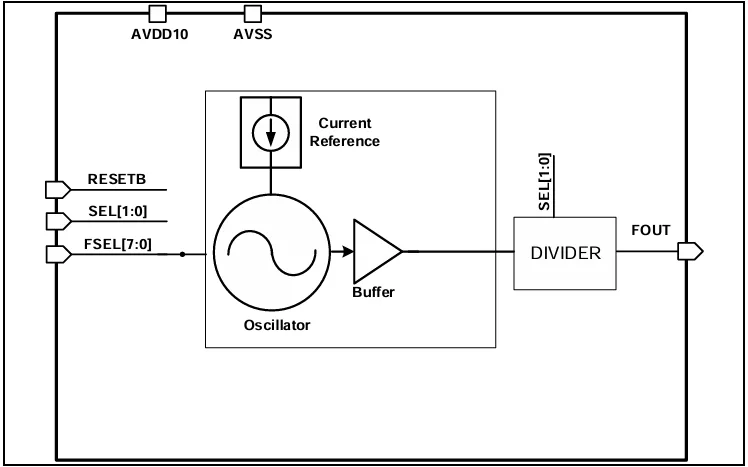
In this paper, we present a flexible ring oscillator IP designed for a 40nm CMOS technology, whose oscillation frequency can be chosen from 200kHz to 20MHz. It was developed using a new design approach, in which analog IPs are designed from scratch to be flexible, employing modular blocks that can be easily customized. The IP is silicon proven. It works with a supply voltage of 1.2V and features 5% frequency accuracy, occupying an area of 0.0022mm2.
This article reviews the functional-safety attributes of Classical CAN and CAN FD, then explains how CAN XL preserves and extends them. It also discusses higher-layer safety protocols, fault-tolerant CAN XL controller implementations, and CANsec, the CAN XL security extension inspired by the MACsec model. Finally, it highlights how the CAST CAN XL controller IP and CANsec acceleration IP can support the efficient deployment of safety- and security-capable in-vehicle networks.
This article outlines Key ASIC R&D team's upcoming PLL suitable for high-speed SerDes having ultra low jitter with LC- tank VCO, and supporting up to 16 GHz output clock to sample the data.
This article outlines our R&D team's upcoming PLL suitable for high-speed SerDes having ultra low jitter with LC- tank VCO, and supporting up to 16 GHz output clock to sample the data.
How do you ensure that every part of a system receives the clock it needs—without wasting power or sacrificing performance? The answer lies in creating a well-structured frequency plan built around a PLL.
Agile Analog’s tamper detection IP is a comprehensive set of sensors and monitors designed to detect a wide variety of physical attacks and side-channel attacks (SCAs). T