Arasan to demonstrate the industry's first MIPI SWI3S™ IP at the MIPI Member meet in Taipei
Arasan provides a Total SWI3S™ IP Solution including the SWI3S™ PHY which will be available on multiple foundry nodes 22nm and below.
Arasan Chip Systems is a System on Chip (SoC) Intellectual Property (IP) provider of a suite of Mobile Industry Processor Interfa…
Arasan Chip Systems is a leading System on Chip (SoC) Intellectual Property (IP) provider of a complete suite of Mobile Industry Processor Interface (MIPI) compliant IP solutions, which consists of IP cores, verification IP, software stacks and drivers, protocol analyzers, hardware platforms (HVP’s) for software development and compliance testing and optional customization services.
The Mobile Connectivity (MIPI) compliant IP cores are interface building blocks that simplify interconnect architectures in mobile platforms. This leads to smaller footprint, greater inter-operability between mobile IP, chips and devices from diverse sources and lower power and Electro Magnetic Interface (EMI).
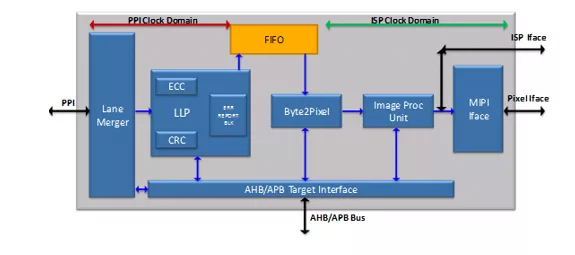
Arasan IP Core that functions as a MIPI Camera Serial Interface (CSI-2 Combo) Receiver, which interfaces between a peripheral device (Camera module) and a host processor (baseband, application engine). The CSI-2 Combo Receiver IP communicates over a D-PHY (or) C-PHY serial link to image processing block, part of the application engine. The Arasan CSI-2 combo IP is MIPI compliance and provides a standard, scalable, low-power, high-speed interface that supports a wide range of higher image resolutions.
Compliant with the following MIPI specifications
CSI-2 Combo Receiver Core features:
Pixel formats supported
Host interface for register configuration and monitoring,
• Verilog HDL of the IP Core
• User guide
• Synthesis scripts
• Link report
• CDC report
• Verilog test suite
• Gate count estimates available upon request
Note: some files may require an NDA depending on provider policy.

CSI-2 v1.3 Receiver IP is a MIPI IP core from Arasan Chip Systems Inc. listed on Semi IP Hub.
Engineers should review the overview, key features, supported foundries and nodes, maturity, deliverables, and provider information before shortlisting this MIPI IP.
Yes. Buyers can compare this product with similar semiconductor IP cores or IP families based on category, provider, process options, and structured technical specifications.