What is 50mA CMOS buck regulator - TSMC 0.18µ?
50mA CMOS buck regulator - TSMC 0.18µ is a DC/DC Converter IP core from Obsidian Technology listed on Semi IP Hub.
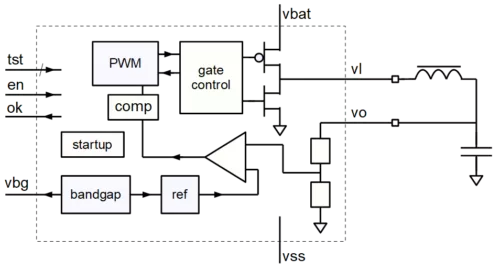
The OT1150t180_50mA is a 50mA CMOS buck regulator designed for use in a wide variety of mixed signal device applications.
The OT1150t180_50mA is a 50mA CMOS buck regulator designed for use in a wide variety of mixed signal device applications. Input range is 3V-5.5V and output voltage is 1.8V, making it suitable for 5V logic or lithium battery voltage inputs.
Two pins are required for this function: 5V input and 1.8V return. An external 50uH inductor and 1µ F capacitor are required.
Designed for TSMC 0.18µ processes with 5V fet option.
Note: some files may require an NDA depending on provider policy.

50mA CMOS buck regulator - TSMC 0.18µ is a DC/DC Converter IP core from Obsidian Technology listed on Semi IP Hub.
Engineers should review the overview, key features, supported foundries and nodes, maturity, deliverables, and provider information before shortlisting this DC/DC Converter IP.
Yes. Buyers can compare this product with similar semiconductor IP cores or IP families based on category, provider, process options, and structured technical specifications.