One PHY, Zero Tradeoffs: Multi-Protocol PHY for Edge AI Interface Consolidation

From smart cameras to autonomous vehicles and compact edge servers, edge AI is pushing more compute, storage, and connectivity into smaller, more power-constrained systems deployed outside the data center. These designs must simultaneously ingest sensor data, move information to local accelerators, connect to displays or storage, and maintain reliable network links—all within tight area, thermal, and BOM limits. As a result, system designers face a fundamental tradeoff: supporting more interfaces typically means integrating more PHY IP, each consuming valuable die area, power, and board space that edge platforms can least afford.
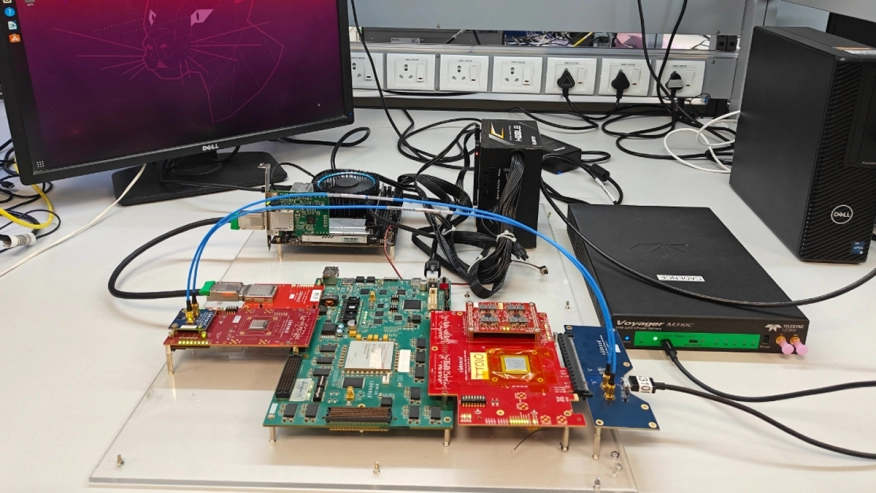 The Cadence 10G multi-protocol PHY was architected to address this exact challenge. Designed to scale across multiple process nodes, it consolidates PCI Express (PCIe), USB, DisplayPort, Ethernet, and other interfaces into a single, compact, silicon-efficient block. What sets it apart is simultaneous multi-protocol support, which enables multiple data paths without duplicating hardware, requiring extra board connectors, or paying the area and power penalty of separate IP blocks.
For edge AI, this translates directly into smaller die area, simplified routing, lower BOM cost (including fewer IP licenses, discrete components, and board connectors), and reduced system-level power. This combination is proving increasingly essential as edge devices are tasked with performing more local inference while maintaining energy efficiency.
Where It Matters Most
The benefits of flexible and simultaneous multi-protocol operation are evident in the most demanding edge environments:
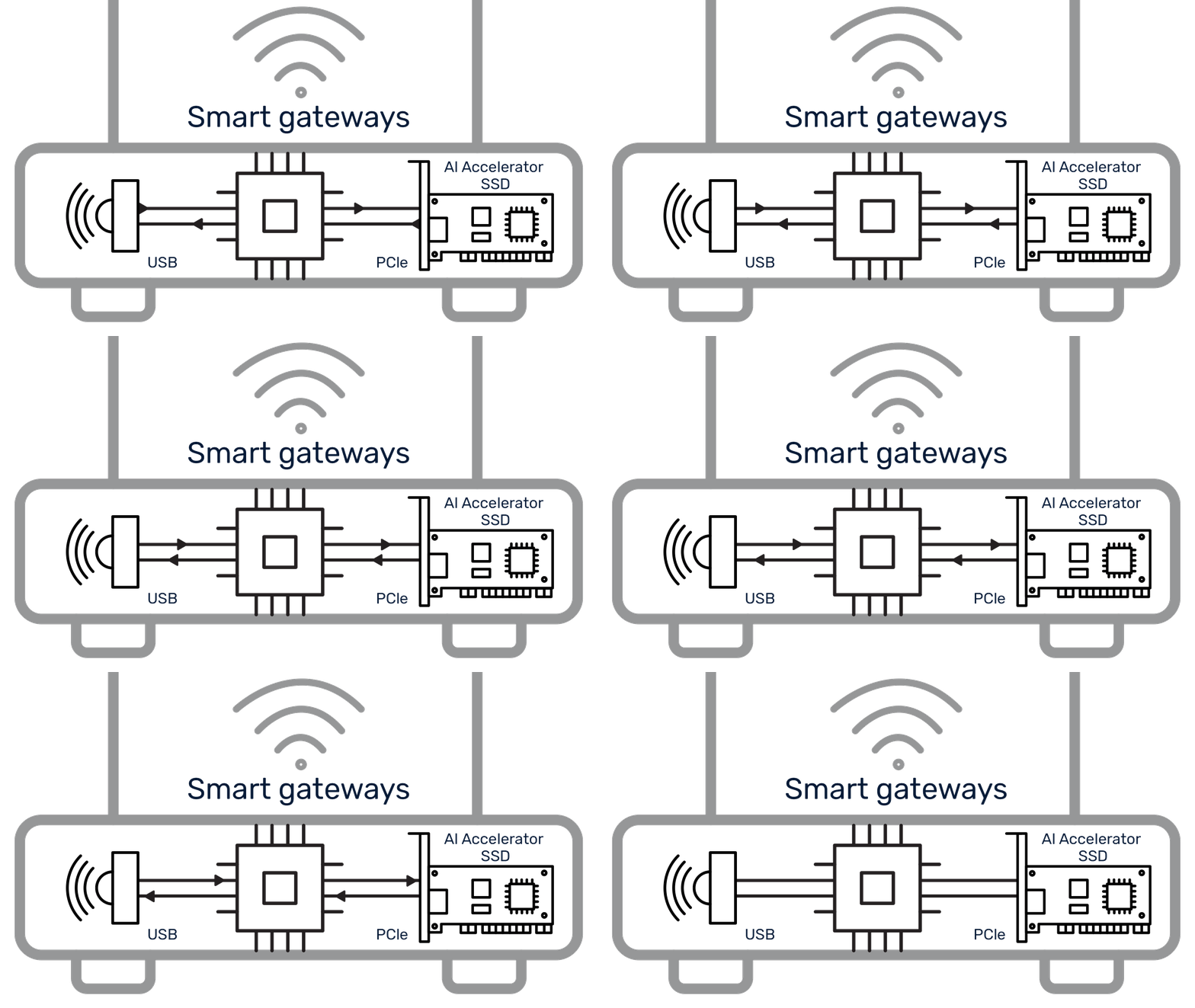
Smart Gateways
USB connects sensors or Wi-Fi/Bluetooth modules, while PCIe links to AI accelerators or SSDs. Cadence's multi-protocol PHY eliminates redundant IP blocks, reducing both die area and BOM cost.
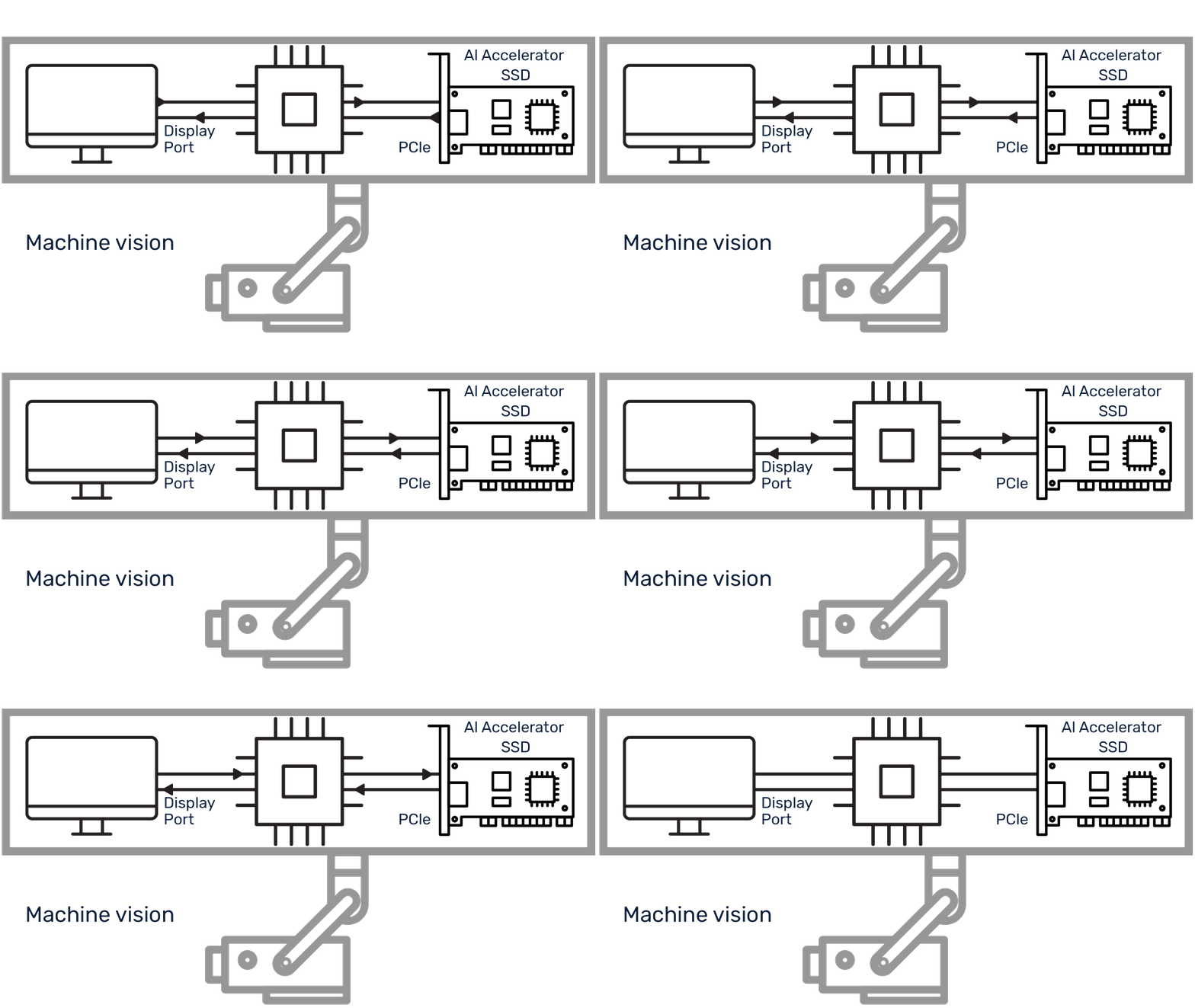
Machine Vision Systems
DisplayPort drives high-resolution monitors while PCIe moves data to compute engines. A single Cadence multi-protocol PHY handles both without additional discrete components.
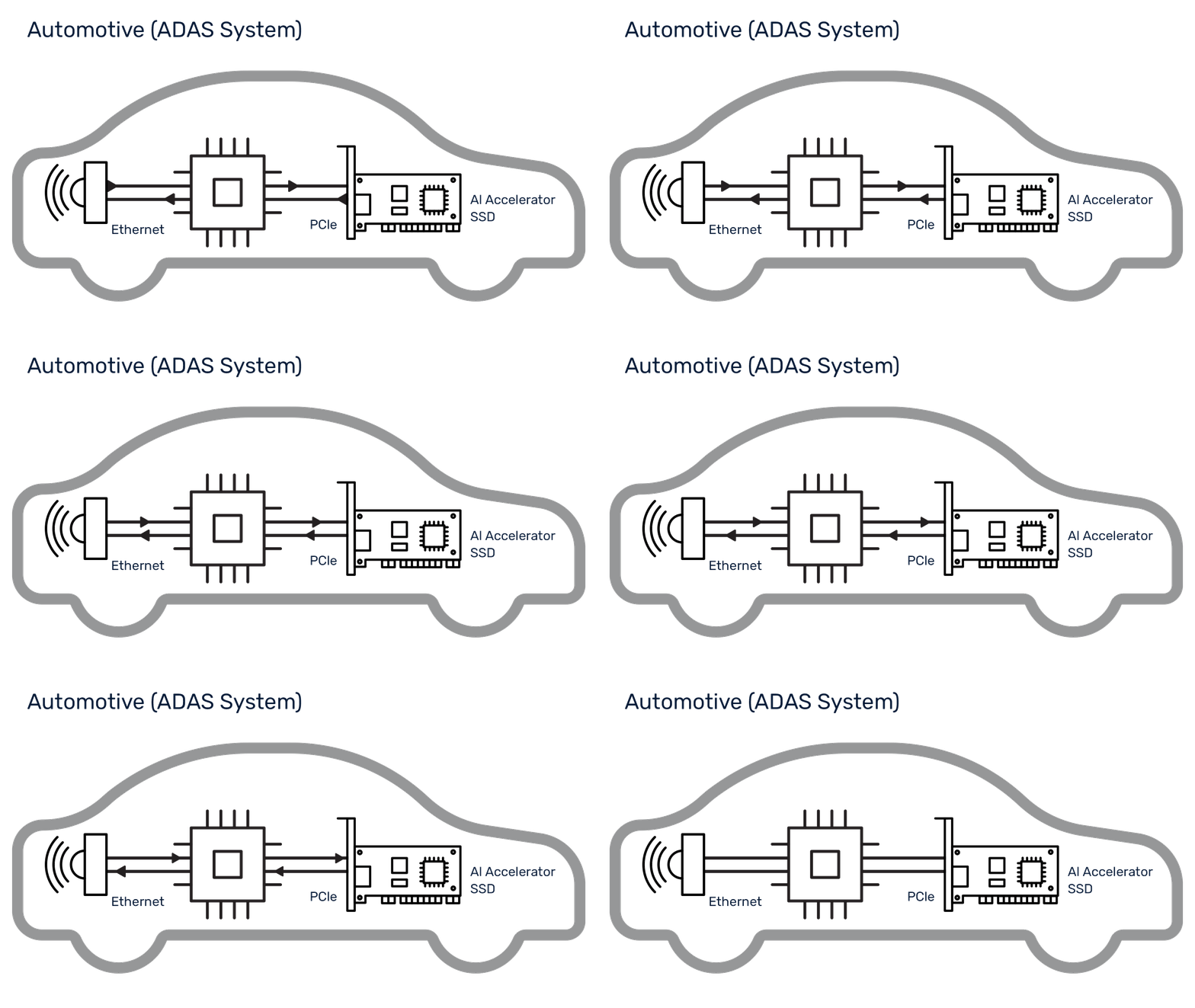
Automotive Edge Compute
Ethernet provides in-vehicle networking, while PCIe feeds AI processors for ADAS and autonomy. Cadence's multi-protocol PHY is capable of supporting AEC Q100 standards, making it suitable for these safety-critical environments.
Built to Scale Across Your Product Line
Because the same PHY architecture works across product lines, design teams avoid redesigning boards for every new product variant. One validated block can be reused across gateway, machine vision, and automotive SKUs, reducing both qualification time and time-to-market.
Reusing a validated PHY architecture also reduces verification effort and integration risk, which is especially critical in long-lifecycle and safety-conscious edge deployments.
Cadence demonstrated the PHY's multi-protocol support on a live silicon test chip and captured it on video. Watch the demo to see how the engineering team approaches multi-protocol flexibility across smart gateway, machine vision, and automotive designs.
To learn more about Cadence's multi-protocol PHY solutions for edge AI designs, visit cadence.com.
Explore Multi-Protocol PHY IP:
Related Semiconductor IP
- 10Gbps Multi-Protocol PHY IP (+PCIe 3.1)
- 10G Multi-Protocol PHY, GF 22FDSOI x1, N/S, for Automotive, ASIL B Random, AEC-Q100 Grade 1
- PHY for PCIe 4.0 - Low-power, long-reach, multi-protocol PHY for PCIe 4.0
- Multiprotocol 10G PHY, TSMC N7 x2, North/South (vertical) poly orientation
- Multiprotocol 10G PHY, TSMC 16FFC x1, North/South (vertical) poly orientation
Related Blogs
- 16Gbps SerDes Multiprotocol Multilink PHY IP
- New 16Gbps Multi-link, Multi-protocol SerDes PHY Enhances Datacenter Connectivity
- Rambus showcases 56G Multi-Protocol SerDes (MPS) PHY at the Samsung Foundry Forum
- 32G Multi-Protocol SerDes PHY Out the Gate