Why ASIC Design Makes Sense for LLM-On-Device
A look at architectural and design considerations when designing ASICs for LLM-on-device.
By Steve Xu, Co-Founder and Chief Architect, XgenSilicon
EETimes | July 14, 2025
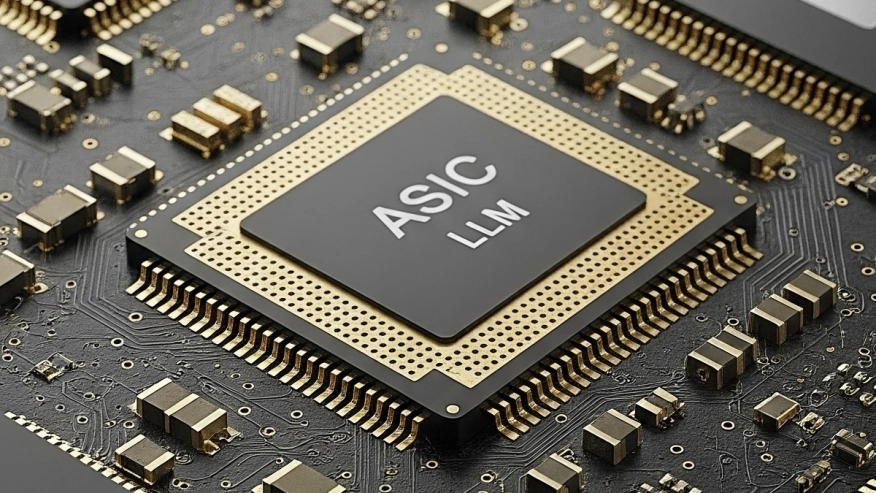
Multimodality LLMs can enable powerful real-time vision and audio applications if chip power and cost meet the constraints of edge devices. By adopting an ASIC approach, it’s possible to achieve a hardware-efficient implementation through custom design, resulting in lower power and cost compared to using off-the-shelf components, such as GPUs, NPUs, and application processors.
An ASIC design is a systematic approach to address power efficiency bottlenecks, which may be different from model to model and per deployment constraint.
For example, the power of Snapdragon AR1+ Gen 1 running a 1B vision model is 1 watt. An ASIC implementation of the same model can reduce it to 0.1 watt with design tradeoffs between silicon die area and power consumption by shifting the design from NPU + DDR architecture to ASIC + on-chip memory architecture. For smart glasses with a 500 mAh battery, this translates the active time of vision from 0.5 hours to 5 hours.
In this article, we’ll illustrate architectural and design considerations to be taken into account when planning and designing ASICs for LLM-on-device.
To read the full article, click here
Related Semiconductor IP
- NPU IP
- JPEG XL Encoder
- I2C Master/Slave Controller Core
- NVMe Validation Test Suite
- Hybrid Memory Cube Verification IP
Related News
- Why the Microsemi-Actel deal makes complete sense
- Analysis: Why ARM-AMD makes sense
- Cadence-Mentor deal makes sense, says analyst
- Analyst: AMD-ARM deal makes no sense
Latest News
- GF unveils roadmap to deliver the world’s most advanced FD-SOI platform for Physical AI
- GlobalFoundries marks Dresden expansion milestone, announces next-generation platform for Physical AI
- TSMC September 2026 Revenue Report
- Lattice Collaborates with Arm to Advance Secure, Adaptable AI Data Center Infrastructure
- ZLG Selects CAST CAN XL and TSN IP for Next-Generation Vehicle-Network Development and Test Tools