Advanced Architectures' Floating Point Accelerator Selected for XML Parallel Processing Architecture
Advanced Architectures' Floating Point Accelerator Selected for XML Parallel Processing Architecture
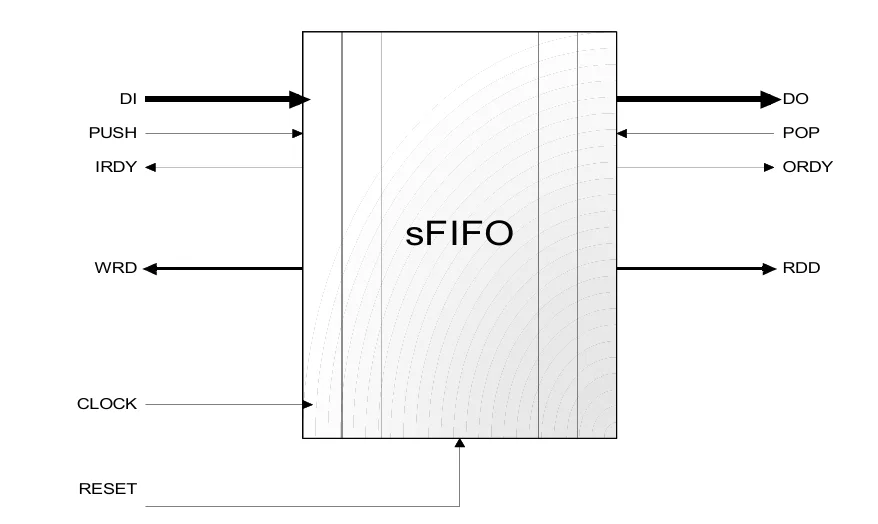
The sFIFO controls are designed to operate over a wide range of clock frequencies.
The sFIFO controls are designed to operate over a wide range of clock frequencies. The interface signals are fully synchronous; no asynchronous signals are present on either side. Only reset may be asynchronous in that it may be asserted asynchronously and synchronized internally to the clock.
The FIFO also has a programmable fall-through for first data entering an empty FIFO. It may be “0” in which case the input is passed combinatorially to the output, or “1” where the FIFO appears like a simple register.
Note: some files may require an NDA depending on provider policy.
Synchronous FIFO with configurable flags and counts is a FIFO / CAM IP core from Advanced Architectures listed on Semi IP Hub.
Engineers should review the overview, key features, supported foundries and nodes, maturity, deliverables, and provider information before shortlisting this FIFO / CAM IP.
Yes. Buyers can compare this product with similar semiconductor IP cores or IP families based on category, provider, process options, and structured technical specifications.