MIPI D-PHY Transmitter/Receiver for Samsung 28nm FD-SOI
The MIPI® D-PHY Transmitter/Receiver is useful 4 Data Lanes transmitter/receiver hard macro for DSISM/CSI-2® of Samsung 28nm FD-SOI process.
Overview
The Renesas MIPI® D-PHY Transmitter/Receiver is useful 4 Data Lanes transmitter/receiver hard macro for DSISM/CSI-2® of Samsung 28nm FD-SOI process.
Key features
- Renesas MIPI D-PHY Transmitter/Receiver can be used for analog Transmitter/Receiver of following interface .
- MIPI alliance Specification for D-PHY Version 2.1 15 December 2016.
- MIPI alliance Specification for DSI (Display Serial Interface).
- MIPI alliance Specification for CSI-2 (Camera Serial Interface 2).
- Technology is Samsung 28nm FD-SOI 8M.
- Supply voltage can be applied 1.1V for core voltage, 1.8V for IO voltage.
- Maximum data rate of each channel is 1.5Gbps at High-speed mode.
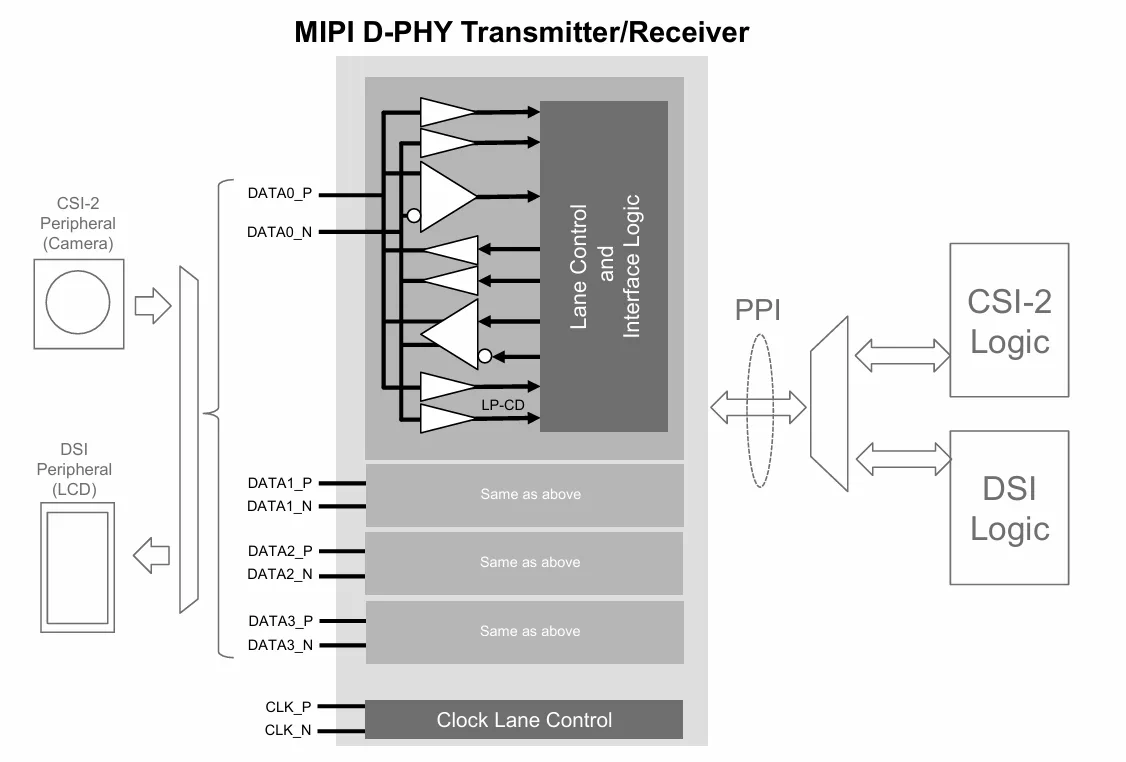
Block Diagram
Silicon Options
| Foundry | Node | Process | Maturity |
|---|---|---|---|
| Samsung | 28nm | FDS | Available on request |
Specifications
Identity
Standards & Interfaces
Files
Note: some files may require an NDA depending on provider policy.
Provider
Learn more about MIPI PHY IP core
MIPI DPHY Solution
Infineon Drives Automotive MCU Performance Higher with Synopsys Interface IP
Cadence First to Demo Complete M-PCIe PHY and Controller Solution at MIPI and PCI-SIG Conferences
Super Edge Medical SoC (SEMC)
D-PHY, M-PHY & C-PHY? First Look at Testing MIPI's Latest PHY
Frequently asked questions about MIPI PHY IP
What is MIPI D-PHY Transmitter/Receiver for Samsung 28nm FD-SOI?
MIPI D-PHY Transmitter/Receiver for Samsung 28nm FD-SOI is a MIPI PHY IP core from Renesas listed on Semi IP Hub. It is listed with support for samsung Available on request.
How should engineers evaluate this MIPI PHY?
Engineers should review the overview, key features, supported foundries and nodes, maturity, deliverables, and provider information before shortlisting this MIPI PHY IP.
Can this semiconductor IP be compared with similar products?
Yes. Buyers can compare this product with similar semiconductor IP cores or IP families based on category, provider, process options, and structured technical specifications.