Vendor: Zero ASIC Category: eFPGA

eFPGA on GlobalFoundries GF12LPP

GF12LPP process node; 4.8 mm X 4.8 mm; 51K LUTs

GlobalFoundries 12nm LP+ Available on request View all specifications

Overview

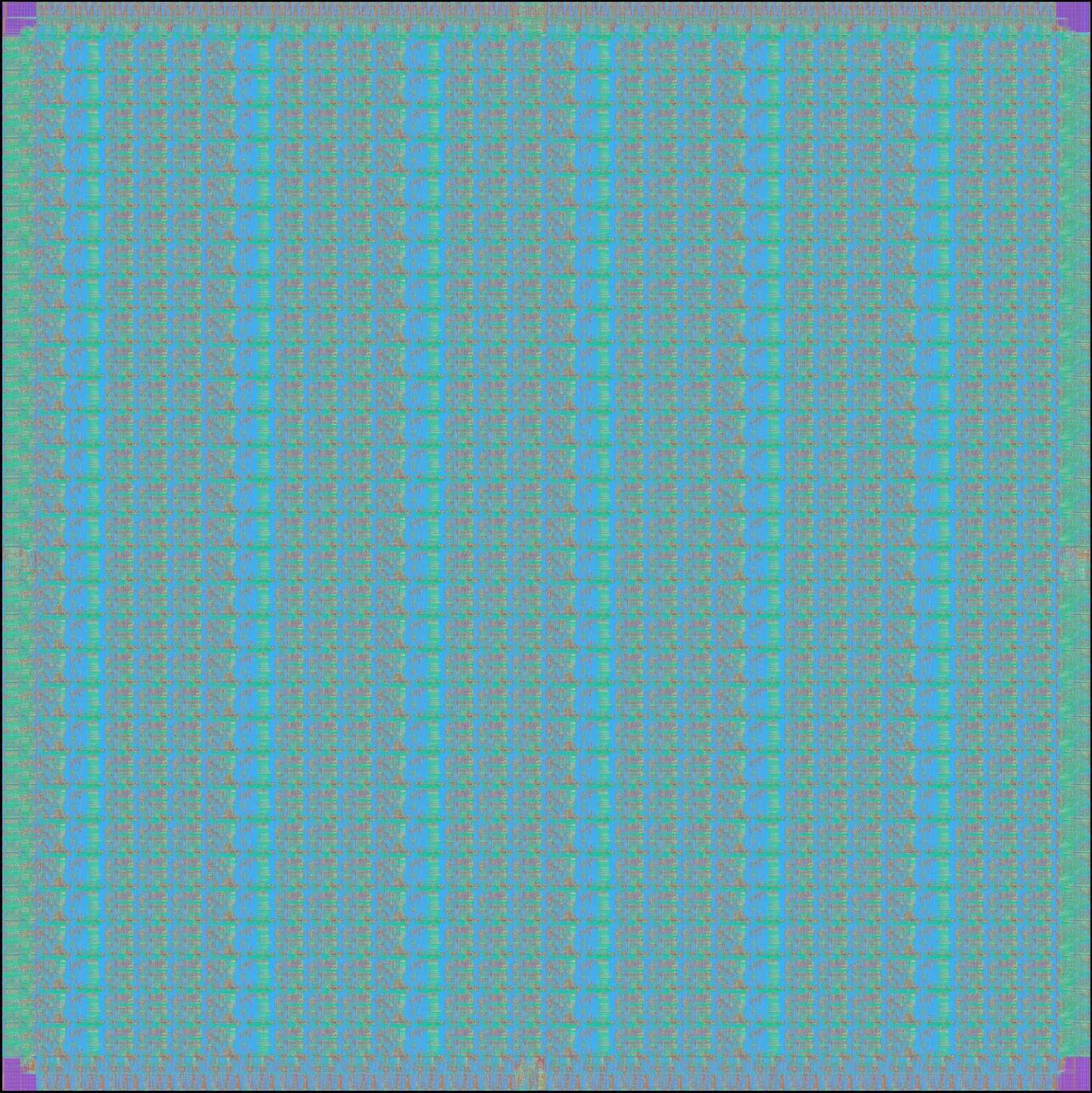
The Z1015 standard eFPGA architecture has been ported to the GlobalFoundries GF12LPP process. Released to general availability in June 2026, the Z1015 is the largest Platypus eFPGA core to date and is the hardened IP at the heart of Zero ASIC’s heterogeneous FPGA chiplet. See the launch announcement for details.

Process LUTs Regs I/O DSPs BRAM Width Height
GF12LPP 51,840 63,944 12,112 180 180 4.8mm 4.8mm


Key features

  • GF12LPP process node
  • 4.8 mm X 4.8 mm
  • 51K LUTs
  • 63K registers
  • 3Mb BRAM (180x16kbit)
  • 180 DSPs
  • 12K GPIO pins
  • 4 global clocks
  • APB programming interface
  • 100% open and standardized FPGA architectures
  • 100% open source FPGA bitstream formats
  • 100% open source FPGA development tools

Block Diagram

Benefits

Platypus is the ONLY commercial eFPGA product backed up by:

  • 100% open and standardized FPGA architectures
  • 100% open source FPGA bitstream formats
  • 100% open source FPGA development tools

Applications

  • FPGA/CPLD/ASIC obsolescence
  • hardware security
  • I/O peripherals
  • interface bridges
  • motor control
  • signal muxing
  • power management
  • glue logic

Silicon Options

Foundry Node Process Maturity
GlobalFoundries 12nm LP+ Available on request

Specifications

Identity

Part Number
Z1015-GF12LPP
Vendor
Zero ASIC
Type
Silicon IP

Files

Note: some files may require an NDA depending on provider policy.

Provider

HQ: USA

Learn more about eFPGA IP core

The Practical Guide to eFPGA Integration

Embedded FPGA technology is increasingly recognized as a strategic enabler for adaptive ASIC and SoC architectures. Yet many engineering teams still hesitate when evaluating eFPGA integration. Why?

eFPGA: The ASIC Power-Up, Not an Off-the-Shelf Substitute

In semiconductor design, there is a persistent misconception that adding an embedded FPGA (eFPGA) to an SoC is simply a way to “shrink” a standalone FPGA onto your die. If you view eFPGA merely as a substitute for a Commercial Off-The-Shelf (COTS) FPGA, you’re overlooking its broader architectural and lifecycle advantages.

Tapeout Predictability with Hardened eFPGA IP Blocks

For architects, adding flexibility via embedded FPGA (eFPGA) is a natural solution for post-silicon requirements, allowing for evolving standards and late-breaking feature additions. However, a critical question remains: Does adding programmable logic help your schedule, or does it introduce a new layer of uncertainty and risk? The answer lies in the delivery format. While soft IP offers configuration flexibility, hardened eFPGA IP blocks are the secret weapon for teams prioritizing tapeout predictability.

Accreditation Without Compromise: Making eFPGA Assurable for Decades

For embedded FPGA (eFPGA) to succeed in defense, we must change the narrative. It cannot be treated as a hobbyist FPGA dropped into an SoC. It must be treated as an assured ASIC IP block governed by disciplined processes, verifiable artifacts, and increasingly by open-source toolchains that guarantee long-term independence.

Silicon Insurance: Why eFPGA is Cheaper Than a Respin

This blog reframes the “flexibility vs. cost” debate in modern SoC design, positioning eFPGA not as a luxury feature, but as a critical financial hedge against the rising costs of advanced silicon nodes.

Frequently asked questions about eFPGA IP cores

What is eFPGA on GlobalFoundries GF12LPP?

eFPGA on GlobalFoundries GF12LPP is a eFPGA IP core from Zero ASIC listed on Semi IP Hub. It is listed with support for globalfoundries Available on request.

How should engineers evaluate this eFPGA?

Engineers should review the overview, key features, supported foundries and nodes, maturity, deliverables, and provider information before shortlisting this eFPGA IP.

Can this semiconductor IP be compared with similar products?

Yes. Buyers can compare this product with similar semiconductor IP cores or IP families based on category, provider, process options, and structured technical specifications.

×
Semiconductor IP