Overview
hellaPHY™ RSTD IP core addresses new FCC E911 indoor location accuracy requirements, and opens the door for low-cost IoT wireless network positioning solutions.
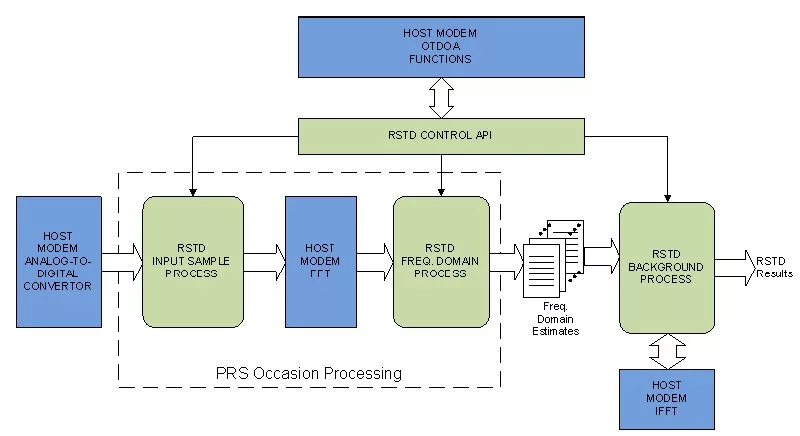
hellaPHY RSTD, is an advanced signal processing algorithm that was developed to improve LTE wireless network indoor and outdoor location accuracy and offers extreme performance in an efficient low-power DSP implementation. The algorithm has been demonstrated to outperform advanced super-resolution algorithms at a fraction of the complexity. It is designed to be a drop-in replacement for existing Reference Signal Time Difference (RSTD) algorithms in User Equipment(UE) chipsets and can be customized for any unique DSP or interface requirements. The hellaPHY RSTD IP core is designed to support advanced LTE features contemplated by operators as well as for LTE Release 14 including PRS muting, CRS plus PRS transmit diversity, and fractional Ts reporting. The hellaPHY RSTD IP core is scalable and can support CAT-M through CAT-15.
hellaPHY RSTD can also support indoor commercial applications and will help operators develop new features to enhance their user experience. The potential for new applications that can rely on a very low-cost and low power positioning using hellaPHY RSTD are enormous. In particular, with the emergence of IoT, where the cost and power of traditional GNSS based positioning solutions become more prohibitive, hellaPHY RSTD offers a low cost and accurate off-the-shelf solution.
Learn more about Channel Coding IP core
PHY Wireless today announced it has separated from its parent, Acorn Technologies. The spin-off will allow PHY Wireless to become a leading pure play provider of high performance accurate positioning mobile solutions for carriers, chip makers, IoT module manufacturers, application service providers and end users.