What is High Dynamic Range?
High Dynamic Range is a Image Conversion IP core from BTREE Co,LTD listed on Semi IP Hub.
HDR improves the visibility of the output image compared to the input images by increasing the contrast of the image/video reprod…
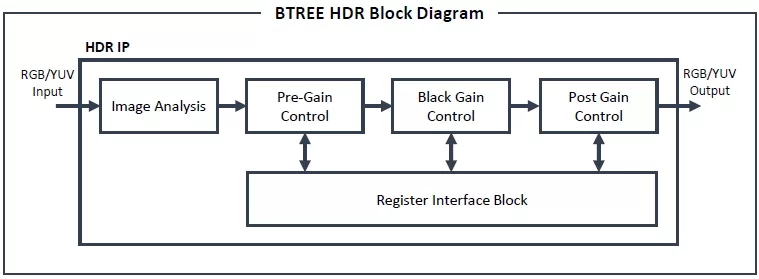
HDR improves the visibility of the output image compared to the input images by increasing the contrast of the image/video reproduced on the display. BTREE's HDR algorithm automatically analyzes the input image/video and calculates the brightness value for each region. User can control the strength of the HDR output and select the region to apply the HDR.
Note: some files may require an NDA depending on provider policy.

High Dynamic Range is a Image Conversion IP core from BTREE Co,LTD listed on Semi IP Hub.
Engineers should review the overview, key features, supported foundries and nodes, maturity, deliverables, and provider information before shortlisting this Image Conversion IP.
Yes. Buyers can compare this product with similar semiconductor IP cores or IP families based on category, provider, process options, and structured technical specifications.