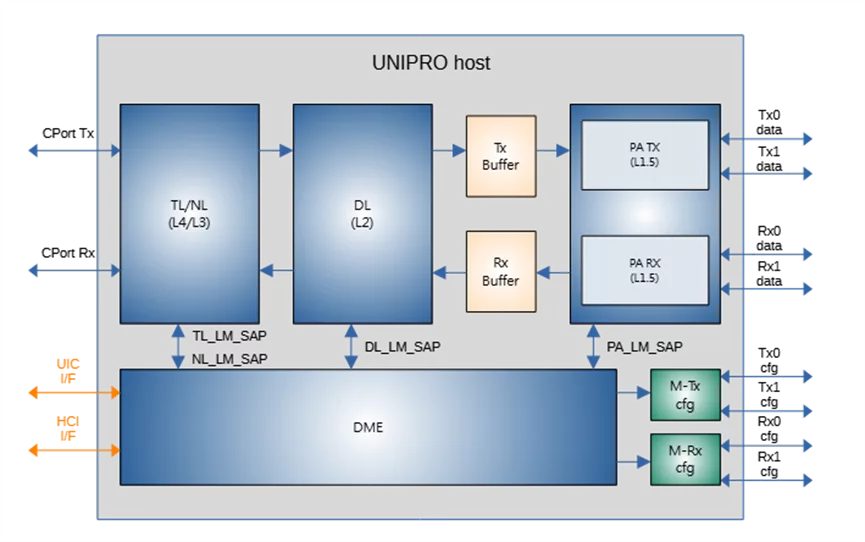
Learn more about UniPro IP core
The Foundation IP includes an TSMC N12e® ULL (Ultra Low Leakage) SPSRAM memory compiler designed to deliver high density and high performance with extremely low leakage and optimized area, while incorporating essential low-power features such as redundancy, power gating, and BIST.
This collaboration combines these controller capabilities with M31’s silicon-proven MIPI PHY portfolio with a strong track record of successful deployments, enabling M31 to offer a comprehensive MIPI subsystem solution integrating high-speed MIPI PHYs and MIPI CSI/DSI controllers to address the growing requirements of high-resolution imaging and display applications.
M31 Technology Corporation (M31), a global leader in silicon intellectual property (IP), held its earnings conference today and announced consolidated revenue of NT$422 million for the second quarter of 2026, representing a 6.9% increase quarter-over-quarter.
M31 Technology Corporation (M31), a leading global provider of silicon intellectual property (IP), announced that the Board of Directors has approved a private placement of common shares as part of a cash capital increase, bringing in ASPEED Technology Inc. (ASPEED) as a strategic investor.
With the rapid growth of AR/VR and high-resolution imaging systems such as drones and action cameras, MIPI CSI (Camera Serial Interface) and MIPI DSI (Display Serial Interface) require both high data throughput and low power consumption. M31 provides a MIPI C-PHY and D-PHY IP combo solution implemented on TSMC N3P and N3C processes.
Consolidated revenue for the first quarter reached NT$395 million, representing a year-over-year decrease of 9.2%. The decline was primarily attributable to timing fluctuations in contract signings for certain key advanced-node customers in North America, with the related revenue expected to be recognized in the second quarter.