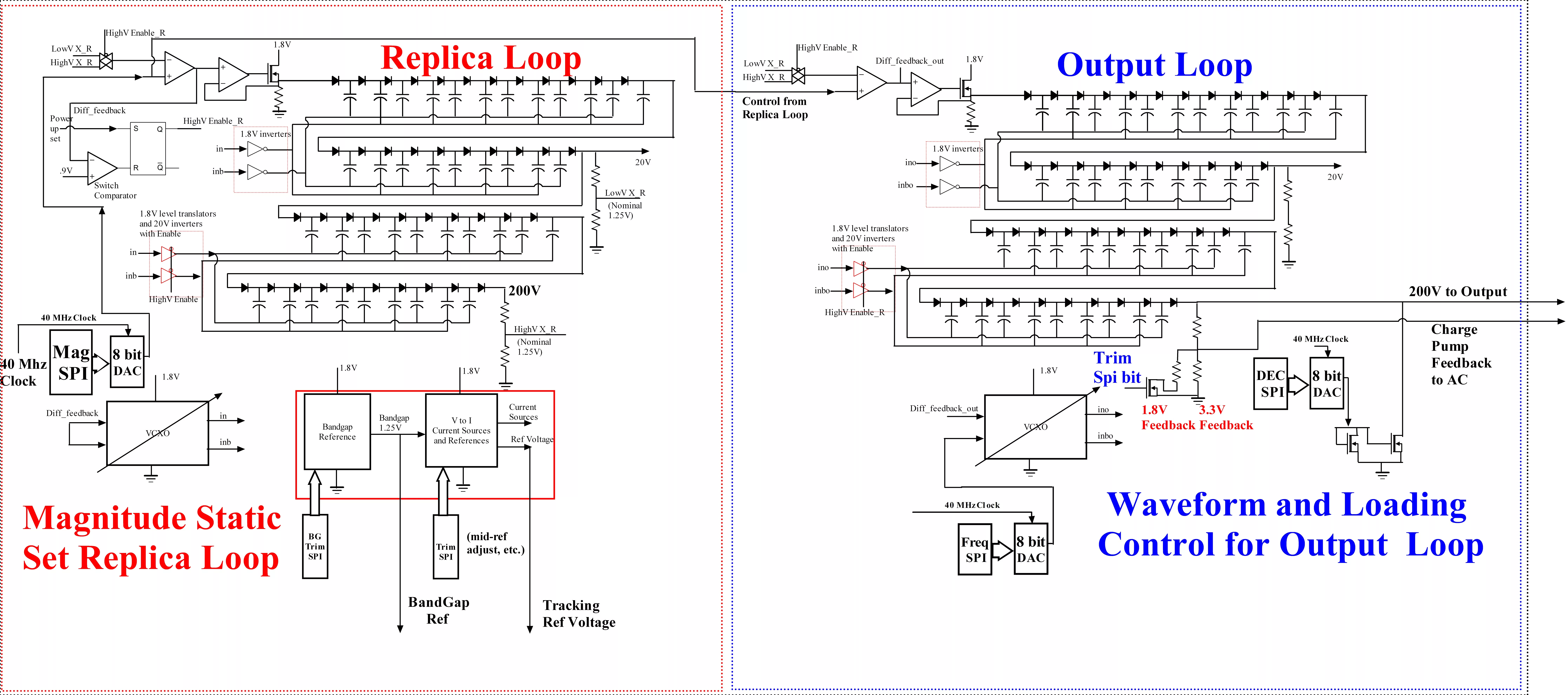
Overview
The CC-301IP is a variable Frequency, Regulated High Capacity Charge Pump which can be utilized as a supply booster (single stage +5% to +20%) of a given Supply voltage for on-chip component (op amp, ADC, DAC, Comparator, etc) headroom extension, enhancing the rail to rail performance of on chip components. The CC-301IP Charge Pump range can be extended to create a +40V to +100V on chip generated High Voltage supply for MEMS or Haptic Circuits. The CC-301IP features an on-board VCO for Charge Pump output load adjustability and enhanced Boost Phase performance and contains an on-board regulator for Charge Pump Voltage output adjustment and regulation to +-1% of the set output voltage target.
The CC-301IP can be customized per customer requirements, fitting into any foundry manufacturing node.
Learn more about DC/DC Converter IP core
This white paper introduces a procedure for choosing the proper DCDC switching converter for a given application. It explains basic, performance, and optional metrics in detail. It also demonstrates other practical aspects that are sometimes overlooked by system designers. Multiple application examples are provided.
This article focuses on the design issues that are simplified by including an integrated inductor optimized for a range of electrical and layout applications as part of the power management solution
In this article, we review the effect of radiation on passive and active electronic components and the technologies, processes and device techniques that make them radiation-tolerant or radiation-hard.
In this second part of Paving the way for the next generation audio codec for True Wireless Stereo (TWS) applications whitepaper, energy efficiency will be discussed and several means to achieve extra-long playtime will be exposed.
The free lunch offered for decades by Moore’s law is now over and scaling down to the next technology node no longer offers the required energy efficiency gains. Design teams must now pursue their gains by deploying increasingly complex power management techniques to meet the demands of the new IoT markets.
To know which LDO you need, you must first define the application of your LDO and then examine which parameters are most important when dealing with that application. With the multiple parameters that characterize a particular LDO, it is not easy to determine which LDO is best suited. To help you figure this out, we have put together this reference. This guide presents a list of all the key LDO parameters along with their definitions, the most common applications of LDOs, and which parameters are critical for each.