Provider

Floadia Corporation
HQ:
Japan
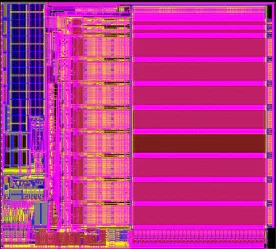
Established in 2011, Floadia is a spin-out of experienced engineers who were developing embedded memory at Renesas Electronics Corporation for more than 20 years. The company licenses its intellectual property (IP), including manufacturing process and circuit designs, necessary for the embedded memory production. Floadia’s development team comprises not only circuit designers but also engineers with expertise in the manufacturing process. One of the company’s strengths is its ability to develop optimal memory IP according to customer’s specifications and manufacturing process.
As battery-powered devices such as smart phones and tablet rapidly become more feature-rich and sophisticated, the memory, one of a key component is required to reduce its cost, power consumption and geometry. The demand for Non-Volatile Memory* (eNVM) is increasing due to its wide range of applications including program and data storage, performance tuning (trimming), and storage of encryption keys. Floadia has developed the technology to embed NVM within other operational circuit while minimizing additional manufacturing process and hence enables IC and microcontroller manufacturer to reduce cost and geometry dramatically. Furthermore, as Floadia’s eNVM uses FN tunneling** for data writing, power consumption per memory cell can be reduced by 100,000 to 1,000,000 times.
The Internet of Things (IoT) is expected to become more pervasive and as a key component of IoT products, memory is indispensable. Floadia’s low-cost, low-power-consumption memory can facilitate the mass deployment of IoT devices such as beacons and various sensors. It can also enhance the profitability of IoT business and contribute to the major expansion of the IoT market. Manufacturing costs have risen for semiconductor foundries and fabless companies as the miniaturization of silicon process design rule advances further. The installation of Floadia’s versatile and user-friendly memory allows these companies to reduce not only costs, but also the time to reach mass production.
Learn more about Flash IP core
ONFI 5.2 is the latest generation of ONFI device standard, published in 2024. ONFI 5.2 devices have added several major features over previous generation ONFI standards.
Here, the authors propose a concealable PUF using V-NAND flash memory by generating PUF data through weak Gate-Induced-Drain-Leakage (GIDL) erase. The differences in doping depth among V-NAND strings arising from the fabrication cause variations in GIDL erase performance. The resulting V-NAND PUF demonstrated ideal security characteristics while maintaining 100% accuracy under variations in read count and temperature.
Embedded flash and its off-chip counterpart, NOR flash, have been the gold standards for non-volatile memory — the kind used for persistent or long-term data storage — for many years.
Embedded flash memory is reaching its limits as technology nodes for embedded applications shrink below 28nm
Systems using SoCs designed in advanced processes generally rely on external Flash devices that use NOR/NAND Flash memory technology for non-volatile storage. NOR Flash memory offers many benefits for device manufacturers and consumers, such as faster reading, low power consumption, and smaller area. In contrast, NAND Flash memories are ideal for applications such as data storage, where higher memory capacity and faster write and erase operations are required.
Next-generation automotive systems are advancing beyond the limits of currently available technologies. The addition of advanced driver assistance systems (ADAS) and other advanced features requires greater processing power and increased connectivity throughout the vehicle.