Low-loss compression of CPRI baseband data
This paper describes a method of using Mu-Law compression for Gaussian-like waveforms – for example, baseband IQ data, as used in CPRI interfaces.
The enhanced Common Public Radio Interface (eCPRI) Altera® FPGA IP core implements the eCPRI specification version 2.0.
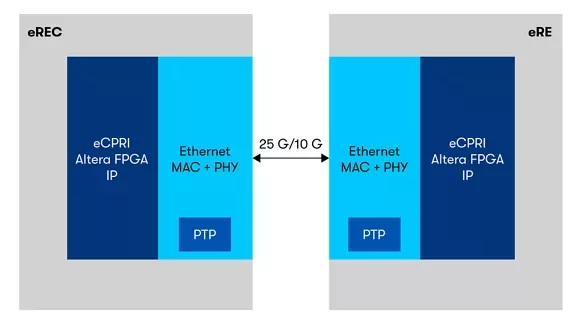
The enhanced Common Public Radio Interface (eCPRI) Altera® FPGA IP core implements the eCPRI specification version 2.0. It is a front-haul interface protocol for radio base stations aimed at connecting the eCPRI Radio Equipment Control (eREC) and the eCPRI Radio Equipment (eRE) via front-haul transport network.
Note: some files may require an NDA depending on provider policy.

eCPRI Altera® FPGA IP is a CPRI IP core from Altera listed on Semi IP Hub.
Engineers should review the overview, key features, supported foundries and nodes, maturity, deliverables, and provider information before shortlisting this CPRI IP.
Yes. Buyers can compare this product with similar semiconductor IP cores or IP families based on category, provider, process options, and structured technical specifications.