Vendor: Altera Category: Control Logic

NCO Intel® FPGA IP Core

A numerically controlled oscillator (NCO) is a digital signal generator, which synthesizes a discrete-time, discrete-valued repre…

Overview

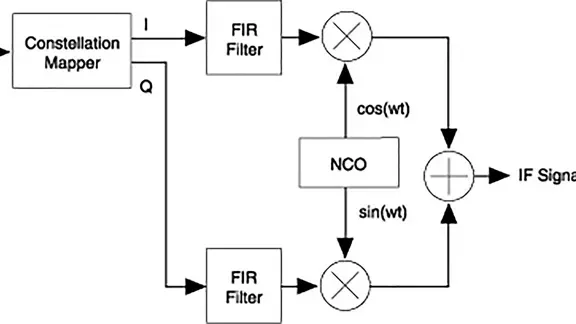
A numerically controlled oscillator (NCO) is a digital signal generator, which synthesizes a discrete-time, discrete-valued representation of a sinusoidal waveform. You can typically use NCOs in communication systems. In such systems, they are used as quadrature carrier generators in I-Q mixers, in which baseband data is modulated onto the orthogonal carriers in one of a variety of ways.
Key features

  • 32-bit precision for angle and magnitude
  • Source interface compatible with the Avalon® interface specification
  • Multiple NCO architectures:
    • Multiplier-based implementation using digital signal processing (DSP) blocks or logic elements (LEs), single cycle and multi-cycle
    • Parallel or serial CORDIC-based implementation
    • ROM-based implementation using embedded array blocks (EABs), embedded system blocks (ESBs), or external ROM
  • Single or dual outputs (sine/cosine)
  • Variable width frequency modulation input
  • Variable width phase modulation input
  • User-defined frequency resolution, angular precision, and magnitude precision
  • Frequency hopping
  • Multichannel capability
  • Simulation files and architecture-specific testbenches for VHDL and Verilog HDL
  • Dual-output oscillator and quaternary frequency shift keying (QFSK) modulator example designs

Block Diagram

Specifications

Identity

Part Number
NCO Intel® FPGA IP Core
Vendor
Altera
Type
Silicon IP

Files

Note: some files may require an NDA depending on provider policy.

Provider

Altera
HQ: USA
Altera, an Intel Company, provides leadership programmable solutions that are easy-to-use and deploy in applications from the cloud to the edge, offering limitless AI possibilities. Our end-to-end broad portfolio of products including FPGAs, CPLDs, Intellectual Property, development tools, System on Modules, SmartNICs and IPUs provide the flexibility to accelerate innovation. Our innovation of programmable logic started in 1983 in Silicon Valley. In 1984, Altera unveiled the world’s first programmable logic device capable of being programmed, erased, and reprogrammed altering the future of innovation.

Learn more about Control Logic IP core

A Comprehensive Post-Quantum Cryptography (PQC) Solution based on Physical Unclonable Function (PUF)

This article provides an in-depth analysis of the specific PPA challenges introduced by PQC and elucidates how PUF-PQC leverages its unique dualtrack strategy to deliver a robust and flexible Hardware Root of Trust (HRoT) across diverse application scenarios. Furthermore, it demonstrates the integration of Physical Unclonable Function (PUF) with a NIST SP 800-90B compliant True Random Number Generator (TRNG) to serve as critical components of PUFrt (Root of Trust), ensuring the security of post-quantum key generation starting from the entropy source.

The Power of Shifting Left: Cadence Accelerating Innovation with Arm

In semiconductor design, projects are remembered for their extremes—legendary successes and cautionary failures. The difference often hinges on when problems are discovered. A bug found late in development can derail timelines and budgets. This is why "shifting left"—moving testing and validation earlier in the process—is now a critical strategy for innovation.

Growing demand for high-speed data in consumer devices gives rise to new generation of low-end FPGAs

When a designer of telecoms equipment such as a server or switch specifies an FPGA for a high-speed data interfacing function, performance is the most important criterion for choosing the preferred device. If the rule of thumb in specifying an electronics component is that the designer can have one or two of high speed, low power consumption, small size and low cost, but not three or all four of these attributes, the telecoms equipment manufacturer will prioritize high speed above the other factors.

Why Hardware Root of Trust Needs Anti-Tampering Design

The hardware root of trust (HRoT) provides the trust base (root key), hardware identifier (UID), hardware unique key (HUK), and entropy required for the secure operation of the entire chip and therefore is often the focus of hacker attacks. If the design can’t effectively resist attacks, hackers can easily obtain the secrets of the entire chip. Attackers can use the secrets to crack identity authentication and data encryption and steal product design know-how, causing application security problems.

Frequently asked questions about Control Logic Accelerator IP cores

What is NCO Intel® FPGA IP Core?

NCO Intel® FPGA IP Core is a Control Logic IP core from Altera listed on Semi IP Hub.

How should engineers evaluate this Control Logic?

Engineers should review the overview, key features, supported foundries and nodes, maturity, deliverables, and provider information before shortlisting this Control Logic IP.

Can this semiconductor IP be compared with similar products?

Yes. Buyers can compare this product with similar semiconductor IP cores or IP families based on category, provider, process options, and structured technical specifications.

×
Semiconductor IP