High-Speed Serial fully digital interface between WLAN RF and BB chips
High-Speed Serial fully digital interface between WLAN RF and BB chips
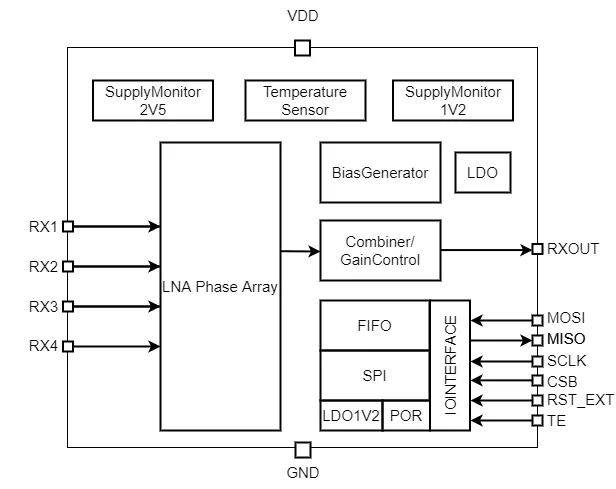
The WEA7681L130 consists of phase array element of 4 LNAs and a combiner.
The WEA7681L130 consists of phase array element of 4 LNAs and a combiner. Each LNA has 3 stages. The WEA7681L130 functions as a MUX. Every LNA stage current is programmable. The chip has a build in FIFO for consecutive LNA sequencing operation. The chip has 3 integrated monitors i) 2.5V chip supply, ii) 1.2V LDO supply and iii) the chip temperature. The LNA gain is controlled by current steering of the last stage together with the LNA bias current on each stage. The chip has been implemented in the 130nm BiCMOS GlobalFoundries process.
Note: some files may require an NDA depending on provider policy.

76 GHZ to 81 GHz LNA Phase Array is a RF Transceiver IP core from Weasic Microelectronics listed on Semi IP Hub.
Engineers should review the overview, key features, supported foundries and nodes, maturity, deliverables, and provider information before shortlisting this RF Transceiver IP.
Yes. Buyers can compare this product with similar semiconductor IP cores or IP families based on category, provider, process options, and structured technical specifications.