RF front-ends for GSM mobile handsets continue down path of integration
RF front-ends for GSM mobile handsets continue down path of integration
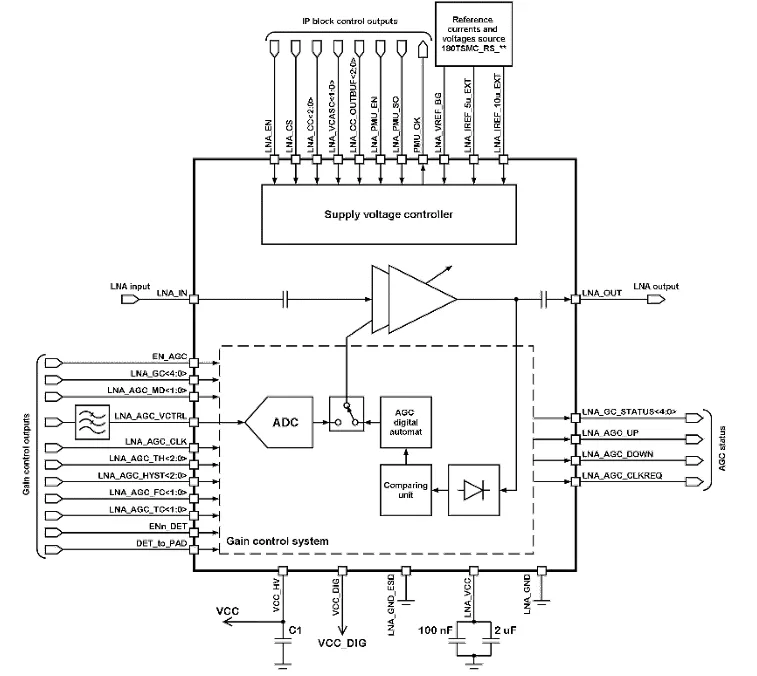
180TSMC_LNA_14 is a IP block which includes a low-noise amplifier (LNA), gain control system and supply voltage controller.
180TSMC_LNA_14 is a IP block which includes a low-noise amplifier (LNA), gain control system and supply voltage controller. The low-noise amplifier is intended to amplify wideband high-frequency signal at the receiver input, provides a wide range of gain control and low noise figure as well as has high linearity characteristics. The supply voltage controller is designed to generate internal reference currents and indicate increased current consumption.
Note: some files may require an NDA depending on provider policy.
| Foundry | Node | Process | Maturity |
|---|---|---|---|
| TSMC | 180nm | BCDG2 | Silicon Proven |

Wideband LNA with a gain adjustment range from -22 to 20dB is a RF Front End IP core from NTLab listed on Semi IP Hub. It is listed with support for tsmc Silicon Proven.
Engineers should review the overview, key features, supported foundries and nodes, maturity, deliverables, and provider information before shortlisting this RF Front End IP.
Yes. Buyers can compare this product with similar semiconductor IP cores or IP families based on category, provider, process options, and structured technical specifications.