Overview
One of the key characteristics of Bluetooth LE Audio is the new high performing standards-based LC3 audio codec. LE Audio requires the LC3 codec which supports scaling from 345kbps to just 16kbps while ensuring high-quality audio in both congested radio environments and at long distances. LC3 is both higher quality and more efficient than the SBC codec used in Classic Audio. LC3 aims to reduce dependency on proprietary codecs that supplemented SBC but don’t offer multi-vendor interoperability, which is necessary for applications like Auracast™ broadcast audio.
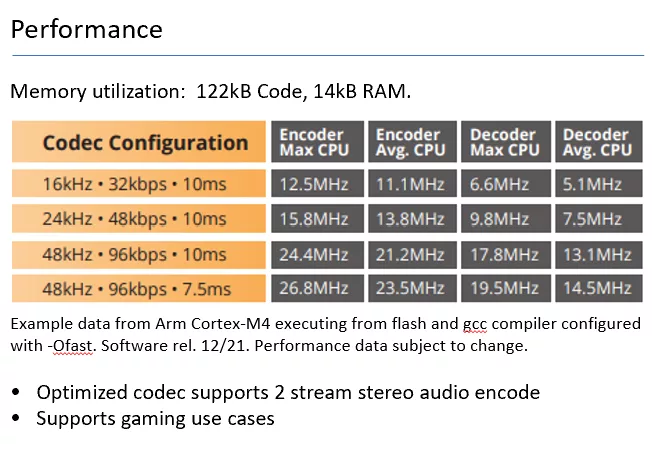
Packetcraft LC3 supports demanding audio use cases running multiple codec instances on a single processor, without requiring a dedicated DSP. LC3 is part of the overall LE Audio solution offered by Packetcraft, and when combined with Packetcraft Host and Packetcraft Controller, licensees receive a comprehensive, fully-integrated Bluetooth LE Audio solution from a single software supplier.
Packetcraft LC3 is highly optimized for Arm® Cortex® processors and can be used with your preferred Bluetooth SoC complemented with exceptional engineering support.
Also available is Packetcraft LC3 Tester, a companion test tool which allows the Packetcraft LC3 codec to be validated, characterized, and qualified on a target hardware platform.
Learn more about Audio Codec IP core
In this fifth and last part of Paving the way for the next generation audio codec for True Wireless Stereo (TWS) applications whitepaper, a hastened but safe and improved design flow by Dolphin Design will be discussed.
In this fourth part of Paving the way for the next generation audio codec for True Wireless Stereo (TWS) applications whitepaper, the pure audio performance will be discussed.
In this third part of Paving the way for the next generation audio codec for the True Wireless Stereo (TWS) applications whitepaper, the latency performance and how it impacts the ANC performance will be detailed.
In this second part of Paving the way for the next generation audio codec for True Wireless Stereo (TWS) applications whitepaper, energy efficiency will be discussed and several means to achieve extra-long playtime will be exposed.
The audio market for wireless Bluetooth headsets is growing rapidly. Audio devices using Bluetooth (BT) connectivity are more ubiquitous than ever. People have gotten used to wireless audio systems, and the mobile phone industry is pushing towards a world without audio connectors and cables. The latest trend in wireless headsets and speakers is True Wireless Stereo systems (TWS), consisting of two independent units that are each charged in their own charging case.
Improving Design Timing and Simplicity for Lower Cost and High Performance Multistandard Audio Decoder STA012