Overview
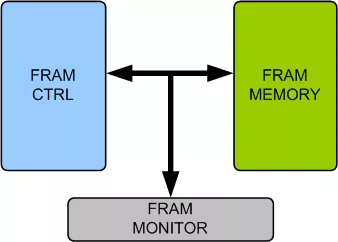
FRAM Memory Model provides an smart way to verify the FRAM component of a SOC or a ASIC. The SmartDV's FRAM memory model is fully compliant with standard FRAM Specification and provides the following features. Better than Denali Memory Models.
FRAM Memory Model is supported natively in SystemVerilog, VMM, RVM, AVM, OVM, UVM, Verilog, SystemC, VERA, Specman E and non-standard verification env
FRAM Memory Model comes with optional Smart Visual Protocol Debugger (Smart ViPDebug), which is GUI based debugger to speed up debugging.
Learn more about MRAM / RRAM IP core
This article will explore the potential advantages of RRAM and MRAM in various applications and elucidate why such new technologies are imperative to address future memory demands, as well as some challenges designers may encounter in the implementation.
Amir Regev, Weebitnano
In this article, a new way to implement high performance data storage is presented, allowing the use of server-class storage technology in an embedded environment.
Most of SSD manufacturers jumped into this new storage market with flash-based technology. A second wave of products will come in the near future, using a new generation of non-volatile memories, delivering impressive speed performances compared to NandFlash memories. The SSD manufacturers will have to deal with low latency SSD controller design in order to benefit from the new NVM features, while keeping high reliability and low power consumption.
This white paper proposes a solution based on a full hardware NVMe implementation, describing its architecture, implementation and characterization.
Embedded flash and its off-chip counterpart, NOR flash, have been the gold standards for non-volatile memory — the kind used for persistent or long-term data storage — for many years.
Unprecedented penetration of artificial intelligence (AI) algorithms has brought about rapid innovations in electronic hardware, including new memory devices. Nonvolatile memory (NVM) devices offer one such attractive alternative with ∼2× density and data retention after powering off. Compute-in-memory (CIM) architectures further improve energy efficiency by fusing the computation operations with AI model storage. Electronic characteristics of NVM devices, like resistance in the two resistance states, directly affect the circuit designers’ decisions and result in the varying performance of NVM-CIM chips.