Provider

ChipCraft is a private fabless semiconductor manufacturer that specializes in GNSS technology. The company provides fully integrated, multi-frequency, multi-constellation GNSS receivers of high precision and reliability. The NaviSoC receiver is offered as a chip and as a module, and is dedicated to consumer, industrial and automotive markets. ChipCraft also offers custom silicon design and development services for ASIC and FPGA, as well as silicon-proven IP blocks and IP cores, for multimarket sectors. The company is headquartered in Warsaw, Poland and supports customers worldwide.
ChipCraft offers custom silicon design services for ASIC and FPGA. Our highly experienced, multi-disciplinary development team consists of system and processor architects, system micro-architects, VLSI designers, verification engineers and embedded software designers, as well as experts in communication systems, satellite navigation and signal processing. ChipCraft provides turnkey solutions based on full-flow IC design services. Our team can also deliver custom IP blocks or sub-systems, as well as augment any design team with required expertise. The Warsaw-based company has been providing effective design services and silicon-proven IP since its founding in 2016.
ChipCraft’s flagship product the NaviSoC is a GNSS receiver integrated with an application processor on a single silicon die. The NaviSoC system on a chip delivers high precision, high reliability and security with low power consumption in a small size. The flexible solution offers customization to user requirements. The product serves variety of applications, including LBS, IoT, Lane-level Navigation, UAV and Autonomous Drones, Asset tracking, Time Synchronization, Smart Agriculture, Surveying and Mapping.
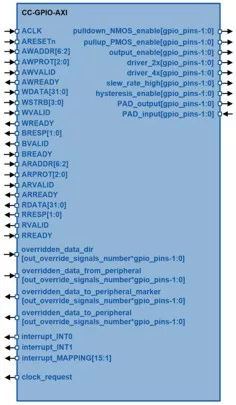
Learn more about GPIO IP core
For over a decade, Sofics has collaborated with CERN, the European Organization for Nuclear Research. Sofics has delivered advanced GPIO cells tailored for radiation-hardened applications, supporting CERN’s groundbreaking particle physics experiments.
This paper provides a complete solution to the GPIO Verification for any SoC. GPIO interface is available in every ASIC. To avoid duplicate efforts and (save) time to verify the GPIO interface, we have produced this Generic GPIO verification suite. It is a UVM-based verification environment, with all the necessary subcomponents that are required to verify any GPIO design.
To complete our task as engineers we rely on the tools we use. We collaborated with Siemens EDA solutions back in 2025 on a webinar about how we use their tools to develop our designs and layouts.
Post-quantum cryptography (PQC) is moving from theory to engineering reality. With NIST-standardized algorithms ML-KEM (FIPS 203) and ML-DSA (FIPS 204) now finalized, FPGA developers face a practical challenge: How to integrate these algorithms efficiently on resource-constrained hardware?
The I2C (Inter-Integrated Circuit) Bus invented in 1980 by Philips Semiconductors (NXP Semiconductors today) was a massive step forward in simplifying communications in embedded systems. It is a simple two-wire interface for synchronous, multi-master/multi-slave, single ended serial communication. Fast forward 45 years to today and it is still widely used for attaching low speed peripheral Integrated Circuits (ICs), processors and microcontrollers. But silicon today has changed...