Provider

Logic Fruit Technologies
HQ:
India
Logic Fruit Technologies designs and deploys embedded solutions for customers around the world. The company has specific experience FPGA Design Services, Hardware Design Services, RTL Testing, variety of Digital Protocols, Communication Buses and Tools, including 1G, 10G Ethernet, PCIe, DIGRF, USB3.0, STM, HDMI, and software-defined radio (SDR), as well as Encryption, Protocol Compliance, Signal Generation, Data Analysis, IoT Technology, and Multiple Image Processing Techniques.
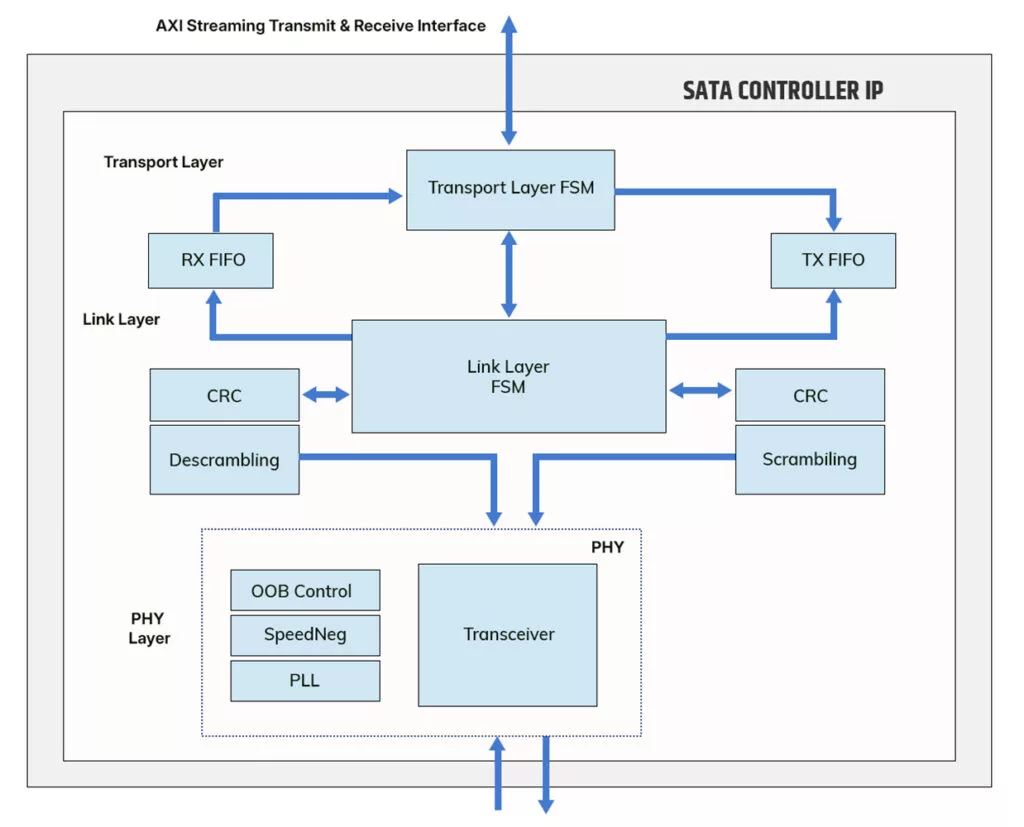
Learn more about SATA Controller IP core
Many times we are not aware of very useful EDA tool options which are already available. Even if such options are very well documented, we don't look at them and try them. But some options are very useful and if you know them, it makes job of design engineer and/or verification engineer very easy. Here, I am going to talk about one very powerful and useful VSIM option of QuestaSim. It is VCDSTIM option of VSIM.
The paper describes the methodology used for functional verification of the USB 3.0 device controller core. The core model has been developed at two different levels of abstraction: RTL model for synthesis and SystemC TLM model for high speed simulation, early software development and early test-bench creation.
Oftentimes, in order to save on the cost of IP, a company will select an encrypted netlist as the deliverable instead of the RTL source code. This is especially common among companies looking to develop in FPGA devices where they can often get the necessary IP from their FPGA vendor.
To support High Definition Television (HDTV) application, the System on Chip (SoC) presented in this paper has to support multiple and concurrent internal processes. Most of these operations read data from memory, process them and store the resulting data into memory. Each functional unit of the system is responsible for a specific data processing, but all the data are stored in the same shared external memories.
Eric Esteve
Eric Esteve